
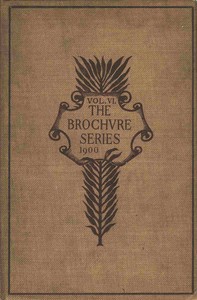
The Brochure Series of Architectural Illustration, vol. 06, No. 06, June 1900
So one June day in 1900, somebody pulled together a small series of drawings and descriptions—little pamphlets, really—from various architects and critics. They called it volume 06, number 06. You wouldn’t see this on a classroom shelf now, but for people back then, it was basically buzzfeed for building nerds. This isn’t a book you read straight through. It’s split into brief articles, none longer than a page or two: one piece glows about a semi-detached house's plaster cornice; another gets really fired up about irregular roof lines in Quebec churches. The big draw: they never name the people who built places—they’re all about the nameless masons and carpenters whose hands made every window tracery and curly bracket look effortless. Some articles feel deep, almost manic, like the writer woke up and just had to tell you why vergeboards matter. Others simple—just sketches and the line, 'like this gem.'
Nobody is pretending this is Tolstoy. It’s exactly 30 illustrations, stitched together with opinion-filled prose. Suddenly everything becomes the actual mystery of early 20th-century taste. Why is a plain vertical-line supporting no more exciting than a jewel but almost wholly undocumented? The whole booklet feels like a delicious argument that decorations worth hanging a frame on belonged to humble homes first, not just rich libraries. The sad fact is, nobody discusses why—it’s just the draw. Fun personal aside? I actually googled if any of these cottages still existed. I found two foundation lumps in a graveyards’ slide. History died for truth? Probably. But nothing is lost comparing it to Pinterest boards full of today’s faux-Tudors. Yuk.
Why You Should Read It
Instantly transporting and sneaky–this will turn ordinary sights (a portico, mansard curve) into riddles you’ll study while standing in traffic. The authors never use the kind of robotic words you zone out on. It’s all loose sense: '*yes, I’d live in that attic.*' That raw charm means you’re friends with a century-old architect who simply says, 'Nice chimney.' Is anywhere else this dry & loveable?
Final Verdict
Perfect for history buffs with ADD, or anyone who loves flippin’ through your grandparent’s coffee table castoffs. It’s thin enough to read leaning against Home Depot’s lumber aisle and crack a fine grin when you spot the 'Flemish bond' idea now on cheap vinyl houses. Superb during afternoon rain—because fast-building memory requires exactly this fragile sketch.
No rights are reserved for this publication. You do not need permission to reproduce this work.
David Anderson
3 months agoThe layout is perfect for tablet and e-reader devices.
Robert Thomas
2 years agoGiven the current trends in this field, the objective evaluation of the pros and cons is very refreshing. This is a solid reference for both beginners and experts.






Patricia Taylor
10 months agoUnlike many other resources I've purchased before, the footnotes provide extra depth for those who want to dig deeper. An excellent example of how quality digital books should be formatted.