
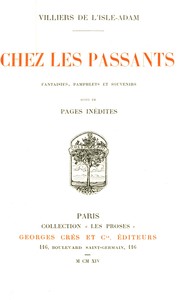
Chez les passants: fantaisies, pamphlets et souvenirs. Suivi de pages inédites
So, what exactly is this book? Chez les passants (which roughly means 'Among the Passersby') is a wild mix. It's a collection of Villiers de L'Isle-Adam's shorter works—fantasies, satirical pamphlets, and personal recollections. This edition also includes some previously unpublished pages, which is a treat for fans. There's no single plot. Instead, you hop from a scathing critique of popular theater to a poignant memory of a chance encounter, then to a bizarre allegorical tale. It's a literary scrapbook from the edges of the Symbolist movement.
The Story
Don't go in looking for a novel. Think of it as a series of vignettes and rants. Villiers observes the 'passersby' in the world of 19th-century Paris—the artists, the critics, the bourgeois, the dreamers. In one piece, he might imagine a fantastical invention; in another, he bitterly complains about how art has been commercialized. The 'Souvenirs' (memories) are often the most moving, offering glimpses of melancholy beauty and faded elegance. The unpublished pages add another layer, showing his raw, unpolished thoughts. The through-line is his voice: ironic, passionate, and forever disappointed by a world that fails to match his ideals.
Why You Should Read It
You read this for the voice. Villiers is the ultimate disenchanted romantic. He's funny in a way that's all sharp elbows and raised eyebrows. His satire still stings today because we still have pompous critics and shallow trends. But then, he'll switch gears and describe a moment of quiet sadness with such genuine feeling it takes your breath away. It shows you the man behind the legend—not just the author of the famous Tomorrow's Eve, but a struggling artist trying to make sense of his time. It feels personal, like reading someone's brilliant, messy journal.
Final Verdict
This one's for the literary explorers. It's perfect if you're into Baudelaire, Edgar Allan Poe, or the weirder corners of French symbolism. It's also great for anyone who enjoys short, punchy prose that's full of personality. Maybe avoid it if you only like straightforward, plot-driven books. But if you're in the mood for something different—a little cynical, a little beautiful, and totally unique—meet the genius grump, Villiers. You won't forget him.
This text is dedicated to the public domain. You do not need permission to reproduce this work.
Karen Flores
5 months agoI stumbled upon this title and it provides a comprehensive overview perfect for everyone. Truly inspiring.
Elijah Sanchez
3 months agoAfter hearing about this author multiple times, it challenges the reader's perspective in an intellectual way. Exactly what I needed.
Thomas Flores
8 months agoFast paced, good book.
Aiden Davis
1 year agoBeautifully written.



Susan Flores
1 year agoGreat reference material for my coursework.