
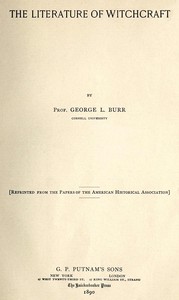
The literature of witchcraft by George Lincoln Burr
Forget everything you think you know about pointy hats and cauldrons. George Lincoln Burr's The Literature of Witchcraft is not a history of magic, but a history of the paper trail that made the witch hunts possible. Published in the early 1900s, this is a collection of Burr's essays and notes that map out the books and pamphlets that defined witchcraft for centuries.
The Story
There's no fictional plot here. Instead, Burr acts as a guide through a library of fear. He starts with the early, skeptical texts and then walks us through the key works that changed everything. He shows how a 15th-century manual for witch-hunters, the Malleus Maleficarum, became a runaway bestseller that gave legal and religious permission for the persecution to spread. He examines the pamphlets that turned local trials into sensational news, spreading panic across Europe and into the American colonies. The 'story' is how these documents interacted, how one book quoted another, and how a consensus of dread was literally published into existence.
Why You Should Read It
This book changed how I see history. Burr makes a compelling case that we can't understand the witch trials without understanding their reading list. It’s startling to see how logical, educated men used careful arguments to justify unbelievable cruelty. The real horror isn't in the accusations, but in the calm, methodical prose used to endorse them. Reading Burr feels like getting the source code for a moral panic. It’s a bit dense at times—this is a serious academic work—but the insights are worth the effort. You start seeing parallels everywhere, in how we talk about outsiders and stoke fears even today.
Final Verdict
This is a must-read for anyone fascinated by the history of ideas, the power of propaganda, or the roots of the Salem witch trials. It's perfect for history buffs who want to go deeper than the textbook summaries, and for readers who enjoy seeing how stories and documents shape reality. It's not a light, narrative history; it's a thinker's book. If you're willing to engage with some old-fashioned academic prose, The Literature of Witchcraft offers a profoundly relevant look at how words can build a world, and then burn it down.
This masterpiece is free from copyright limitations. It serves as a testament to our shared literary heritage.
Sandra Martin
1 year agoFast paced, good book.
Michael Jones
3 months agoNot bad at all.
Elijah Lee
1 year agoHigh quality edition, very readable.


Jennifer Flores
2 months agoHonestly, the pacing is just right, keeping you engaged. A true masterpiece.