1

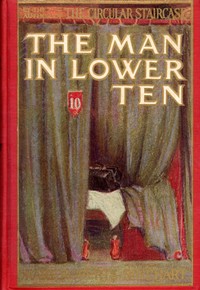
The Man in Lower Ten — Inside the Classic
(0 User reviews)
1288
Project Gutenberg
1999
Not confirmed
Detective and mystery stories; Murder -- Fiction; Railroad travel -- Fiction
Readers of public-domain and historical texts
Project Gutenberg digital edition
en
Edition facts
Words
69,835
Reading time
304 min
Text sections
32
The source record for The Man in Lower Ten — Inside the Classic measures this digital text at 69,835 words, 5 hr 4 min estimated reading time, and 32 detected text sections.
The text analysis averages about 13.7 words per sentence, while the detected sections provide another way to judge how the source is divided.
Project Gutenberg metadata also associates the work with “Detective and mystery stories,” connecting these edition facts with the source record’s subject description.
Source:
Project Gutenberg record #1869
An editorial note examining the structural use of train travel, recurring images of keys and chains, and the movement between confined and open spaces in Mary Roberts Rinehart's mystery novel.
Read the complete public-domain text at its original source.
Read on Project GutenbergThe narrative of The Man in Lower Ten is built around a journey that never quite ends. The story opens with protagonist Lawrence Blakeley boarding a Pullman car in Washington, bound for Pittsburg, and the train becomes a mobile stage for a murder that fractures the expected order of compartments and berths. Rinehart uses the confined, segmented space of the railway carriage to generate a puzzle of mistaken identities and misplaced evidence, where the titular lower berth is both a crime scene and a symbol of the story's structural reliance on physical proximity and chance encounters.
The Train as a Narrative Frame
The journey from Washington to Pittsburg is not merely a setting but the engine of the plot. The Pullman car Ontario is divided into numbered berths—lower ten, seven, nine—that function like cells in a grid, each holding a potential suspect or victim. Rinehart emphasizes the arbitrary nature of these assignments: Blakeley is in lower eleven, the murdered man in lower ten, and the woman across the aisle becomes a key witness. The train's movement forward contrasts with the backward-looking investigation, as characters must reconstruct events that happened in a space that is no longer stationary. This structure allows Rinehart to introduce clues—a torn telegram, a gold chain, a hat box—that are discovered in sequence, each tied to a specific location on the train or at stops along the way.
Recurring Images of Keys and Locks
Throughout the excerpts, keys and locked doors appear as both practical obstacles and symbolic markers of secrecy. The farmhouse door is broken open, its key later found in a turkey gobbler's throat—a comic but pointed detail that underscores how evidence can be swallowed up by the mundane. Blakeley's own investigation involves a key to a locked compartment, and the narrative repeatedly returns to the act of opening or forcing entry. These images reinforce the theme of hidden knowledge: characters are locked into their stories, and the detective must find the right key—literal or figurative—to unlock the truth. The chain of custody for objects like the key and the gold bag becomes a puzzle in itself.
Movement Between Confined and Open Spaces
Rinehart contrasts the claustrophobic interiors of train compartments and farmhouse rooms with expansive outdoor scenes—the sea, the sand, the stars. Blakeley's narrative moves from the stuffy Pullman to the open air of the farmhouse kitchen, then to a beach where the final revelations occur. This alternation mirrors the protagonist's psychological state: trapped by circumstance but seeking release. The farmhouse scene, with its rag-carpeted hall and four-poster beds, feels hemmed in by domesticity, while the later chapter titles promise unbounded horizons. The shift from the train's rigid geometry to the natural landscape suggests that the mystery can only be resolved when characters step outside the initial frame of the crime.
Voice and the Unreliable Narrator
Blakeley introduces himself as a prosaic, unadventurous man, yet he is immediately caught in a sensational crime. His self-deprecating tone—"I am without sentiment (am crossed out and was substituted.—Ed.)"—undermines his reliability, as does his admission that circumstantial evidence can incriminate three different people. The narrative voice is deliberately flat in places, as if Blakeley is trying to impose order on chaos. Rinehart uses this tension between the narrator's calm demeanor and the violent events to create a sense of unease. The reader must question what Blakeley omits or misremembers, especially when he describes his interactions with Alison West, whose own motives remain opaque.
Readers attentive to the story's structure will notice how Rinehart plants clues in the movement between scenes—a key found in a turkey's throat, a hat box glimpsed through a window, a gold chain that connects two characters. The train journey is both the crime's origin and its organizing principle, and the recurring images of locks, keys, and open spaces invite a reading that pays close attention to physical details. The narrative rewards those who track objects as they travel from compartment to farmhouse to courtroom, for in this story, location is never incidental.
Sometimes I think of that editorial note about The Man in Lower Ten, all those keys and locked compartments, and I’m reminded of another restless soul in In the Bishop's Carriage — Inside the Classic. Both books share a quiet ache for open air, a longing to be unlatched from circumstance. I’ve held them side by side for years, two old friends rattling along the same tracks.
There are no reviews for this eBook.
There are no comments for this eBook.
Reader reflection
What did you think of this book?
Answer a few questions and save a private reflection on this device.
Your progress
0
/
10
2
How much did you enjoy the reading experience?
3
Would you recommend this book to another reader?
4
How easy was the book to follow?
5
Would a second reading be valuable?
6
Did it raise ideas you would like to talk about?
7
How would you describe its reading pace?
8
Which part made the strongest impression?
9
What changed or sharpened your thinking?
10