1

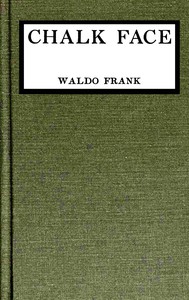
Chalk face — Themes and Context
(1 User reviews)
395
Project Gutenberg
2024
Horror tales; Physicians -- Fiction; Psychological fiction; Man-woman relationships -- Fiction; Murder -- Fiction; Mystery fiction
Readers of public-domain and historical texts
Project Gutenberg digital edition
en
Edition facts
Words: 40,860
Reading time: 178 min
Text sections: 10
Source:
Project Gutenberg record #72967
A physician's first-person confession blurs the line between detective and suspect in a mystery that probes guilt, consciousness, and the limits of rational science. The narrative voice is introspective and fragmented, resisting easy categorization as either horror or psychological fiction.
Editorial Edition Score
4.8/5
★★★★★
★★★★★
Calculated from edition completeness, EPUB availability, text structure and catalogue metadata. Not a user rating.
Edition quality
The narrator of Chalk Face opens his account with a frank admission: he writes not for altruism but to escape an eternal Twilight, a state that is “neither darkness nor brightness, neither warmth nor cold.” This is not a conventional mystery narrator. He is a man of science who has failed in his elected sphere, and his story is framed as a confession that may contribute to a future science of man beyond rational axioms. The dedication to his father calls the book a Parable as much as a mystery story, asking what is more lurid than the depths of desire. From the first pages, the reader is placed inside a consciousness that questions its own motives and reality.
A Confession That Resists Justification
The narrator begins by acknowledging that justification masks true desire, and that the sincerest confessions often start with falsehood. This self-awareness sets the tone for a narrative that is less about solving a crime than about understanding the self. He admits his impulse is warmer than altruism: he writes to dwell briefly in the innocent world where life seems good because death seems real. The Twilight he describes is penetrant and hungry, devouring the flesh of man. This is not a detective calmly gathering clues; it is a man trying to hold onto a world that is slipping away.
The Interrogation of John Mark
In a tense scene, the narrator confronts Mrs. Landsdowne, demanding to know if he is a murderer. She responds with cryptic statements: “You will know what you have done. One can know only that which has been done.” When he asks if the horror is human, she replies, “How do we know how many things are human?” The dialogue is charged with psychological pressure. The narrator physically grips her, then releases her, linking her in his mind with Mildred, a woman he also tried to force truth from. The scene ends with her touching his brow and saying that God’s reasons are unknowable. The excerpt leaves the nature of the crime—and the narrator’s involvement—deliberately ambiguous.
Time and the Unreliable Witness
After leaving Mrs. Landsdowne, the narrator notes the time: 9.03. He reflects that he has swept out far and come back, yet his watch says the same minute. This temporal dislocation reinforces the sense of a mind unmoored. He wonders if he is running from a black apocalypse or rushing toward a blacker revelation. The narrative voice is fragmented, encased in darkness, unable to touch the body of the world. The catalog subjects list this as a mystery and a psychological fiction, but the excerpts emphasize interior crisis over external plot. The reader is given a witness whose perception of time and reality is itself in question.
Readers should approach Chalk Face not as a whodunit but as a study in how a mind processes guilt and uncertainty. The narrator’s voice is the primary evidence; the plot emerges through his fractured recollections and confrontations. Pay attention to the recurring motif of Twilight and the way characters speak in riddles. The mystery here is as much about what the narrator cannot admit to himself as about any external event.
There are no comments for this eBook.
Reader reflection
Before you leave, reflect on the book
Use these questions to collect your thoughts before moving on.
Your progress
0
/
10
2
What was your overall reaction to the book?
3
How likely are you to recommend this book?
4
How demanding did the text feel?
5
How strongly did the book affect you emotionally?
6
Did any part of the book feel personally relevant?
7
Which part made the strongest impression?
8
How understandable was the text?
9
In one sentence, what did you learn?
10
Sophia Johnson
5 days ago