1

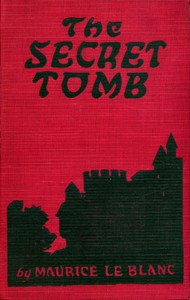
The Secret Tomb — Background and Themes
(1 User reviews)
240
Project Gutenberg
2019
Orphans -- Fiction; France -- Fiction; Treasure troves -- Fiction; Circus -- Fiction; Mystery fiction
Readers of public-domain and historical texts
Project Gutenberg digital edition
en
Edition facts
Words: 75,616
Reading time: 329 min
Text sections: 8
Source:
Project Gutenberg record #59072
Maurice Leblanc's The Secret Tomb follows Dorothy, a circus performer, as she pursues a hidden treasure while navigating clues, family secrets, and a mysterious legacy. The novel's diction and dialogue reveal character through playful banter and precise observations of setting and superstition.
Editorial Edition Score
4.7/5
★★★★★
★★★★★
Calculated from edition completeness, EPUB availability, text structure and catalogue metadata. Not a user rating.
Edition quality
Maurice Leblanc opens The Secret Tomb with a caravan asleep under a sickle moon, a stertorous horse snoring in the ditch. The first voice we hear is a woman's cry: "Saint-Quentin!"—a name that will recur as both a person and a talisman. The dialogue immediately establishes Dorothy as a figure of brisk authority: she smacks and kicks the boys Pollux and Castor, then kisses them tenderly. This blend of roughness and affection, rendered in short, imperative sentences, sets the tone for a narrative where action and emotion are tightly interwoven.
Diction and the Caravan's Voice
Leblanc's diction in the opening chapter is notably concrete and sensory. The caravan "slept on the turf by the roadside, its shutters closed, its shafts stretched out like arms." The simile gives the vehicle a human posture, while the horse's snoring and the church clock striking four anchor the scene in a specific, almost tactile reality. The dialogue is clipped and colloquial: "A nice thing this! I thought as much!" and "Patience! I'm going to bring him back to you by the ears." These lines convey character through rhythm rather than exposition. Dorothy's speech is peppered with imperatives and retorts, marking her as decisive and unflappable. The boys' pleas—"Don't you go away by yourself in the night-time. It's dangerous"—are met with a dismissive "What are you making a fuss about?" This verbal sparring, combined with the physical action of smacking and kissing, creates a vivid domesticity within the traveling circus milieu.
The Tramp's Legacy and Legendary Language
Later in the excerpts, Dorothy encounters a tramp named Hyacinth who recites his father's maxim: "One isn't miserable while one's brave: Fortune is in the firm heart." This aphoristic language stands in contrast to the caravan's banter. The tramp's simple, declarative sentences—"That and a piece of advice"—carry a folkloric weight. He speaks of a yearly pilgrimage to Roche-Périac, waiting for "somebody who will give me hundreds and thousands." The phrase "hundreds and thousands" is deliberately vague, hinting at treasure or coins, but the tramp himself receives only pennies. Leblanc uses this character to introduce a motif of inherited belief: the woman with the club-footed child also follows a family tradition, taking the child to the chapel of Saint Fortunat for "a certain cure." The word "legend" appears explicitly, and the narrative notes that the story has been "deformed" in transmission. This layering of oral tradition—maxim, pilgrimage, miracle—creates a texture of superstition and hope that Dorothy must navigate.
Setting as a Character: The Road and the Sun
Leblanc's descriptive passages often merge setting with the characters' physical states. The journey to Roche-Périac is described as "a painful stage" under "a scorching sun" that overwhelms the horse One-eyed Magpie. The landscape is "barren" and "sparsely inhabited," and the caravan moves slowly. This attention to the environment's harshness—the heat, the dust, the exhaustion—grounds the adventure in bodily reality. The sign-post reading "Roche-Périac 12-1/2 Miles" becomes a milestone of both distance and narrative tension. Dorothy's declaration "We shall sleep there to-night" is a moment of resolve, but the intervening paragraphs detail the picking up of the tramp, the woman, and the child—each encounter slowing the journey further. The setting thus functions as an obstacle and a source of incidental characters, each carrying a fragment of the larger mystery. The road is not merely a backdrop but a force that shapes the plot's rhythm.
Dialogue and the Revelation of Character
Leblanc uses dialogue to reveal character without direct exposition. Dorothy's exchange with Saint-Quentin about the "Golden Fleece" shows her optimism and his reluctance: "Baron de Saint-Quentin, in a fortnight you will be dressed like a dandy." His reply—"And you like a princess"—is followed by the narrator's observation that this prospect "did not seem to give him any great pleasure." The dialogue carries subtext: Saint-Quentin's discomfort hints at unspoken feelings, while Dorothy's cheerful determination masks deeper concerns. Earlier, when she questions the tramp, her "amazement" is concealed, and she says only "That's not a weighty legacy." The restraint in her speech contrasts with the tramp's earnestness. These conversational nuances—what is said, what is withheld, and how the narrator interprets tone—build a layered portrait of the protagonist. The reader infers Dorothy's intelligence and empathy from her actions and her careful responses, not from authorial summary.
Readers attentive to Leblanc's craft will find that The Secret Tomb rewards close attention to its verbal texture. The interplay between the caravan's rough camaraderie, the tramp's proverbial wisdom, and the landscape's oppressive heat creates a world where every detail—a horse's snore, a child's club foot, a sign-post—carries potential significance. The narrative voice shifts between brisk action and reflective description, and the dialogue often does more than advance the plot: it defines relationships and foreshadows conflicts. Approach the novel as a study in how language builds atmosphere and character, and you will uncover layers beneath the treasure-hunt surface.
There are no comments for this eBook.
Reader reflection
Before you leave, reflect on the book
Use these questions to collect your thoughts before moving on.
Your progress
0
/
10
2
How did the book work for you overall?
3
Is this a title you would suggest to others?
4
How much effort did this book require?
5
How strongly did the book affect you emotionally?
6
Did it raise ideas you would like to talk about?
7
What did you think about the pace?
8
How well did it match your expectations?
9
What is the main idea you are taking away?
10

Owen King
3 weeks ago