1

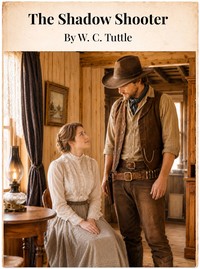
The shadow shooter — Text and Context
(0 User reviews)
102
Project Gutenberg
2026
Western stories; Murder -- Fiction; Cowboys -- Fiction; Cattle stealing -- Fiction; Mystery fiction; Hartley, Hashknife (Fictitious character) -- Fiction; Stevens, Sleepy (Fictitious character) -- Fiction
Readers of public-domain and historical texts
Project Gutenberg digital edition
en
Edition facts
Words: 53,158
Reading time: 232 min
Text sections: 8
Source:
Project Gutenberg record #78766
W. C. Tuttle's 1927 western mystery introduces Hashknife Hartley and Sleepy Stevens investigating a jail shooting in Chongo. The excerpts reveal a comedic opening with a misfit suit, a violent crime scene, and a focus on evidence like a .45 caliber bullet, rather than the catalog's broader 'cattle stealing' and 'cowboys' themes.
Editorial Edition Score
4.7/5
★★★★★
★★★★★
Calculated from edition completeness, EPUB availability, text structure and catalogue metadata. Not a user rating.
Edition quality
The excerpts from W. C. Tuttle's The Shadow Shooter open not with a gunfight but with a comedy of errors: Soapy Weed, squeezed into a mail-order suit that is both too tight and too loose, stands in a bunkhouse under oil lamps, his trousers falling to the floor. The humor is broad and physical, driven by exaggerated measurements and a deadpan sidekick named Cling. This initial scene—a full page of banter about a thirty-one-inch coat and a thirty-nine-inch waistband—sets a tone of absurdity that contrasts sharply with the later, grimmer events.
From Farce to Felony
The tonal shift in the excerpts is abrupt. After the suit-fitting farce, the narrative moves to a jailhouse where jailer Chuck Haverty has been knocked out and prisoner Joe LeClere shot. The language becomes clinical: Sleepy notes “dried gore on his shirt,” and Hashknife finds a .45 caliber bullet “with the nose only slightly battered.” The earlier slapstick—Soapy kicking his trousers against the door—gives way to a procedural discussion of wound placement and time of death. Tuttle uses the same characters in both modes, but their voices change: Cling’s grin wrinkles are replaced by Weary’s cursing as he rides to notify Joe’s family. The catalog lists “Mystery fiction” and “Western stories,” but the excerpts show a mystery that begins with a punchline.
Evidence Over Action
The investigation in the excerpts is notably static. Hashknife and Sleepy sit on a hitch-rack, smoking, while the town gathers. Hashknife admits, “It’s goin’ to take more luck than brains to find out who shot Joe.” The clues are minimal: a bullet, a time window between nine and nine-thirty, and the fact that the shot was fired while Chuck was unconscious. The catalog subjects include “Cattle stealing” and “Cowboys,” but the excerpts contain no rustling, no pursuit, and no range action. Instead, the focus is on the sheriff’s embarrassment and the fiddler’s payment. This suggests the mystery may be more about deduction than chase, though the excerpts are too brief to confirm the full plot.
Voice and Vernacular
Tuttle’s dialogue is dense with period slang and phonetic spelling. Soapy’s “H-e-e-y!” and Cling’s “holee gee” establish a comic register, while later lines like “They busted me in the cranium” maintain a folksy tone even during violence. The narration is spare, letting characters speak for themselves. The excerpts also show a fondness for descriptive names: “Clinging Vine” Heffner, “Soapy” Weed, “Hashknife” Hartley, “Sleepy” Stevens. These monikers, along with the mail-order suit and the fiddle serenade, root the story in a specific, self-aware Western vernacular that the catalog’s generic “Western stories” label only hints at.
Readers should note that the excerpts cover only the opening and a middle section; the full novel may develop the cattle-rustling and cowboy themes listed in the catalog more fully. The evidence here suggests a hybrid work—part comedy of manners, part locked-room mystery—set in a jail rather than on the open range. Pay attention to how Tuttle balances the two tones, and whether the humor undercuts or complements the crime plot.
There are no reviews for this eBook.
Reader reflection
Take a moment to reflect on this book
Create a short personal record of your experience with this book.
Your progress
0
/
10
2
Did this book hold your interest?
3
Would you encourage someone else to read it?
4
How demanding did the text feel?
5
Did any part of the book stay with you emotionally?
6
Would you like to discuss this book with someone?
7
How clearly were the main ideas presented?
8
How distinctive were its ideas or approach?
9
In one sentence, what did you learn?
10
Joseph Brock - 3 weeks ago
Laurie Lynn Fox - 2 weeks ago
Mark Robles - 2 weeks ago