1

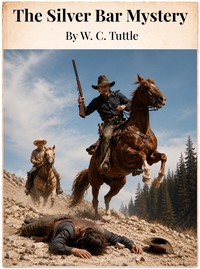
The Silver Bar mystery — Background and Themes
(2 User reviews)
671
Project Gutenberg
2026
Western stories; Kidnapping -- Fiction; Murder -- Fiction; Cattle stealing -- Fiction; Mystery fiction
Readers of public-domain and historical texts
Project Gutenberg digital edition
en
Edition facts
Words: 61,906
Reading time: 270 min
Text sections: 24
Source:
Project Gutenberg record #78717
An editorial note examining W. C. Tuttle's diction, dialogue, and descriptive choices in this 1930 western mystery, focusing on poker-table banter, dialect, and the contrast between Goober's weathered authority and Johnny's youthful energy.
The first chapter of The Silver Bar Mystery opens not with a gunshot or a rider but with a poker game. The dialogue at the table immediately establishes character through speech: Goober Glendon speaks in a deliberate, almost professorial drawl—"The West ain't nothin' like what she was"—while the other players respond with terse, practical interruptions. Tuttle uses the card game as a microcosm of the novel's tensions: bluff, suspicion, and the quiet calculation of odds. The author's diction favors colloquial compression: "three typewriters and a couple Johns" for a full house, and the lament "I ain't held a hand since the Jamestown flood." These phrases root the reader in a specific time and place without exposition.
Dialogue as Characterization
Tuttle lets his characters reveal themselves through how they speak, not what they say about themselves. Goober's speech is measured and aphoristic, full of mock authority: he "moistened the tips of his fingers on his lips" before peeking at his cards, a physical detail that matches his cautious, experienced manner. Johnny Wells, by contrast, speaks in quick, self-deprecating bursts: "If I ever drawed one to a pair, I'd frame 'em." The foreman Cal Sands uses clipped, challenging questions—"You dealt that mess, didn't yuh?"—that hint at suspicion beneath casual banter. Even minor characters are differentiated: the cowboy who interrupts Goober's reminiscence with "How do yuh feel toward that pot?" is impatient, focused on the game. Tuttle avoids lengthy descriptions of personality, trusting the rhythm and content of each character's lines to do the work.
Dialect and Authenticity
The novel's dialogue is thick with regional and ethnic dialect, a deliberate authorial choice that grounds the story in its border setting. Tuttle renders Mexican-accented English phonetically: "Porfiro ees ver' smart man, eh, Mike?" and "Don' be fool and keek some geeft 'orse in the cheen." This extends to the Anglo characters, who use contractions and dropped g's: "Yo're pretty lucky," "I ain't held a hand." The effect is immersive but risks caricature; Tuttle's consistency suggests a methodical ear rather than casual stereotyping. Notably, the dialect shifts in moments of tension—when Sands lies about being thrown from a horse, his speech becomes clipped and evasive: "Horse throwed me. I wasn't lookin' for it, and he shore stood me on my head." The author uses dialect not merely as color but as a tool for pacing and mood.
Descriptive Economy in Action
Tuttle's descriptive passages are lean, favoring physical detail over interior monologue. Goober is introduced with a precise inventory: "partly bald, of medium height, but very thin. His features were sharp, deeply lined, his nose slightly hooked; thin-lipped mouth topped a square chin." The description reads like a wanted poster—functional, visual, and devoid of sentiment. Johnny is sketched with equal efficiency: "hair was inclined to auburn, wide blue eyes, nose slightly upturned above a laughing mouth." The author trusts these external markers to imply character: Goober's sharpness and Johnny's openness. Even the setting is rendered through action: the bunkhouse poker game, the ride into Silver Bar, the aftermath of Sands's robbery—all are conveyed through what characters do and say, not through authorial commentary. This restraint keeps the narrative moving at a brisk pace.
The Mechanics of Suspicion
Tuttle builds mystery through small, telling details in dialogue and gesture. When Goober wins with three queens, Cal Sands asks, "You dealt that mess, didn't yuh?"—a question that lingers, unanswered, as Goober calmly stacks chips. The author does not explain the implication; the reader is left to wonder whether Goober cheated. Later, Sands's plan to kidnap the women is laid out in matter-of-fact dialogue: "Take some old floursacks for masks. Stick up the buckboard, kidnap them two women, blindfold 'em." The casualness of the language—"stick up," "cinch"—contrasts with the violence of the scheme. Tuttle's dialogue often carries subtext: when Sands says "I can tell yuh how to earn the money," the pause before Tony Riecho's response—"What's the idea, anyway?"—signals that the men understand the moral weight of the proposal without needing it spelled out.
Readers attentive to Tuttle's authorial choices will find a writer who trusts dialogue to carry plot and character alike. The novel's mystery emerges not from elaborate clues but from what is said—and left unsaid—at card tables, in bunkhouses, and on moonlit rides. The excerpts suggest a work where voice is paramount: each character's speech patterns are a fingerprint, and the reader's task is to listen closely.
Alexander Hernandez
1 week agoThere are no comments for this eBook.
Reader reflection
Record your reading impressions
A brief reflection can help important ideas stay with you longer.
Your progress
0
/
10
2
Did this book hold your interest?
3
Would you encourage someone else to read it?
4
Did the language feel accessible?
5
Which element worked best for you?
6
Would a second reading be valuable?
7
Did the book meet your expectations?
8
How strong was your personal connection to the text?
9
What is the main idea you are taking away?
10


Harper Thompson
6 days ago