1

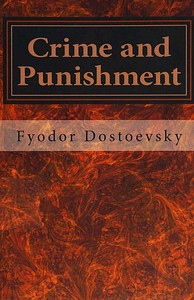
Crime and Punishment — Themes and Context
(0 User reviews)
582
Project Gutenberg
2006
Not confirmed
Detective and mystery stories; Psychological fiction; Saint Petersburg (Russia) -- Fiction; Murder -- Fiction; Crime -- Psychological aspects -- Fiction
Readers of public-domain and historical texts
Project Gutenberg digital edition
en
Edition facts
Words
212,135
Reading time
923 min
Text sections
42
The source record for Crime and Punishment — Themes and Context measures this digital text at 212,135 words, 15 hr 23 min estimated reading time, and 42 detected text sections.
The text analysis averages about 14.0 words per sentence, while the detected sections provide another way to judge how the source is divided.
Project Gutenberg metadata also associates the work with “Detective and mystery stories,” connecting these edition facts with the source record’s subject description.
Source:
Project Gutenberg record #2554
This editorial note examines the internal contradictions in Raskolnikov's reasoning, the recurring imagery of louse and prophet, and the psychological fragmentation evident in the excerpted passages of Dostoevsky's novel.
Read the complete public-domain text at its original source.
Read on Project GutenbergThe excerpt from Crime and Punishment reveals a mind in violent collision with itself. Raskolnikov’s interior monologue oscillates between grandiosity and self-loathing, as he tries to justify a murder he has already committed. The text does not present a coherent theory of crime but a jagged, feverish debate where each assertion is immediately undercut. This note focuses on three observable patterns: the unstable metaphor of the louse, the tension between abstract principle and visceral hatred, and the structural use of fever and delirium as a narrative device.
The Louse and the Prophet
Raskolnikov repeatedly calls himself a “louse,” yet the term shifts meaning within a single paragraph. At one moment he declares, “I am an æsthetic louse and nothing more,” linking the insult to his own aesthetic sensibilities. Shortly after, he claims he is “viler and more loathsome than the louse I killed,” suggesting a hierarchy of vermin where the murderer ranks below the victim. The metaphor is further complicated when he invokes the “prophet” with a sabre—a figure who commands “trembling creation” to obey. Raskolnikov seems to admire this prophet’s willingness to destroy without explanation, yet he cannot sustain the identification. The oscillation between louse and prophet reveals a central instability: he wants to be the one who oversteps, but he also feels himself to be the lowest of creatures.
Principle vs. Visceral Hatred
Raskolnikov insists that he killed “a principle” rather than a human being, yet the excerpt is saturated with physical disgust directed at the old woman. He says, “Ah, how I hate the old woman now! I feel I should kill her again if she came to life!” This hatred is not abstract; it is a bodily reaction that contradicts his earlier claim of dispassionate calculation. He also admits to feeling “physical hatred” for his mother and sister, which he cannot explain. The text thus presents a gap between the murderer’s rationalizations and his emotional reality. The principle he claims to have killed—perhaps the idea that some people are “useless”—is undermined by the raw, personal venom he still feels.
Fever as a Structural Device
The narrative repeatedly attributes Raskolnikov’s thoughts to a “feverish” or “delirious” state. His hair is “soaked with sweat,” his lips are “parched,” and he wonders if he is “raving.” This physical framing serves a dual function. It allows the text to present extreme, contradictory ideas without requiring them to be logically consistent, and it ties psychological turmoil to bodily symptoms. The reader is placed inside a consciousness that cannot trust its own perceptions. The fever is not merely a metaphor for guilt; it is a concrete condition that shapes the rhythm of the prose, with sentences breaking into fragments and exclamations. This technique makes the abstract debate about crime feel immediate and corporeal.
Readers approaching the full novel may find it useful to track how these patterns recur across different chapters. The louse metaphor, the tension between ideology and emotion, and the use of physical illness are not confined to this passage. They reappear in Raskolnikov’s interactions with Porfiry, Sonya, and his family. Noticing these threads can help in distinguishing the character’s self-deceptions from the novel’s broader commentary on rationalization and suffering.
I keep thinking about Raskolnikov’s need to see himself as something other than a louse, and how that ache for significance never quite lets go. It reminded me of the quiet loneliness underneath the plotting in The Silver Bar mystery — Background and Themes. Both feel like studies in how we justify the shadows we carry.
There are no reviews for this eBook.
There are no comments for this eBook.
Reader reflection
Before you leave, reflect on the book
Use these questions to collect your thoughts before moving on.
Your progress
0
/
10
2
Was reading this book enjoyable?
3
Is this a title you would suggest to others?
4
How easy was the book to follow?
5
What did you appreciate most?
6
Would a second reading be valuable?
7
Would this book work well in a reading group?
8
How original did the book feel?
9
What changed or sharpened your thinking?
10