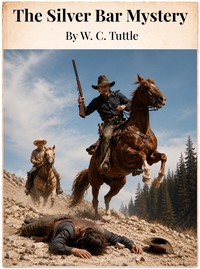
The Silver Bar mystery — Background and Themes
Edition facts
The catalog record for The Silver Bar mystery — Background and Themes provides practical reading context through 61,906 words, 4 hr 30 min estimated reading time, and 24 detected text sections.
The text analysis averages about 10.8 words per sentence, while the detected sections provide another way to judge how the source is divided.
Project Gutenberg metadata also associates the work with “Western stories,” connecting these edition facts with the source record’s subject description.
Calculated from edition completeness, EPUB availability, text structure and catalogue metadata. Not a user rating.
How this score is calculated
- Description quality20 pts
- Title & short description10 pts
- Source metadata20 pts
- Text length15 pts
- Chapters / structure15 pts
- EPUB file integrity20 pts
Total of 100 points, scaled to a 2.5-5.0 range. Editions with an empty description or a missing EPUB file are not scored.
Read the Text
to know whose deal it was next.”
Johnny Wells glanced quickly at Goober, who was calmly stacking up his chips. They were partners, these two--Johnny and Goober--partners in a strange town. They had ridden into Silver Bar late that afternoon, and decided to stay all night. Their destination was the Keno range, twenty miles north-west. They did not know any of the men at the table.
Goober Glendon was past fifty, partly bald, of medium height, but very thin. His features were sharp, deeply lined, his nose slightly hooked; thin-lipped mouth topped a square chin, which jutted a trifle. His eyes were a faded blue, almost hidden beneath bushy eyebrows.
Johnny Wells was twenty-five, range born and raised. He was of medium height, with the physique of a middle-weight fighter. His hair was inclined to auburn, wide blue eyes, nose slightly upturned above a laughing mouth. Johnny was good-looking. Both men wore battered Stetsons, faded shirts, and overalls. Goober wore the shotgun type of chaps, while Johnny affected the flaring batwing variety.
Their belts and holsters were identical, because of the fact that Goober had made them by hand. Goober carried an old, black-handled Colt, while his young companion wore a Colt with carved bone handles.
The game progressed slowly, with Goober steadily piling up chips, while Johnny was hardly able to keep even. Cal Sands drank liquor and swore at his luck. Sands was tall and dark, with snapping black eyes. His hat was black, shirt black, and he wore black trousers. There was not a touch of colour about the man. Sands was possibly thirty years of age, and had been foreman of the Star A outfit for three years.
“Did I hear you say somethin’ about goin’ over to Keno?” asked Sands, speaking to Goober.
Goober nodded slowly, studying his cards. “Yea-a-ah, we’re ridin’ thataway to-morrow. . . . Check the bet.”
“Know anybody over there?”
“No-o-o-o, I don’t reckon we do. Me and Johnny jist driftin’ in for a look around. You acquainted over there?”
“I’m from that part of the country.”
“Thasso? You know Frank C. Austin?”
“So do I. Me and Frank was bunkies long time ago. We’re goin’ over and hit Frank for a job.”
Sands laughed shortly. “Do yuh think Austin is out there runnin’ a ranch?”
“With all the money and interests he owns?”
Goober’s faded eyes studied the face of Sands for several moments.
“I didn’t know,” he said mildly. “The last time I see Frank Austin, I reckon him and me would assay about the same amount.”
“Must have been a long time ago.”
“Somethin’ like twenty-two, twenty-three year ago.”
“Austin is one of the big financiers of the Pacific Coast now.”
“I’ll be damned! Where did he hit it rich like that?”
“Smart investments and all that.”
“Yuh got to have money to make investments.”
“Austin married money.”
“Oh,” thoughtfully. “Then he got married agin, eh?”
“Again? I didn’t know he ever was married more than once.”
Goober picked up his five cards and studied them closely. The pot was played out and a new deal started, when Sands said: “What about Austin being married before?”
“My mistake,” said Goober softly. “I was thinkin’ of another man.”
“I’ve got enough,” sighed Johnny, passing the bet. He leaned back in his chair and began rolling a cigarette.
“I’m goin’ to hit the hay pretty quick,” said Goober. “I’m so sleepy, I can’t hardly see my cards.”
“I’d hate to play yuh, when yo’re asleep,” growled Sands. He started to shove in a stack of red chips, when from out in the street came the report of two shots, spaced about two seconds apart.
“What the devil’s goin’ on out there?” snorted Sands, kicking back his chair. The men were all up from the table, crowding to the doorway.
There seemed to be a little commotion up the street a short distance, and two men were coming down the rickety sidewalk. They reached the doorway, a big, burly man, shoving a drunken young man ahead of him. The younger man was almost too drunk to walk, too drunk to argue intelligently. The big man wore a sheriff’s shield on the lapel of his old vest. He had a gun in his left hand and one in his holster, as he shoved the reeling young man into the saloon. He dropped the gun on the card-table and turned to Sands.
“Git this damn fool out of here, Sands; he just shot Jigger Slade.”
“I think so. Self-defence. Him and Jigger been quarrellin’ all evenin’. Yuh know, they rode in together this afternoon.”
Sands grasped the drunk by the shoulders and shook him roughly. “Hal,” he gritted. “Why didja shoot Slade?”
But the young man merely looked more dazed and slumped back against the bar.
“Hell of a note!” snorted Sands. “And his father due in on that midnight train.”
“Frank Austin comin’ in to-night?” asked Sheriff Nolan.
“Yeah--mebbe the rest of the family. Wilson,” he turned quickly to the other cowboy who had been in the game, “will you take this fool kid back to Keno? Git a livery rig, if he ain’t able to ride. I’ll make it all right with yuh.”
“Sure, I’ll take him for yuh, Cal.”
“Good. C’mon, Hal, you poor fool.”
Nolan, the sheriff, went with them. It broke up the game.
Goober and Johnny went up the street to the saloon in front of which the shooting had taken place. They had laid the body out on top of an old pool-table, and a doctor was making an examination. No one seemed to know much about it, except that it was self-defence, and no one seemed greatly concerned. It seemed that Jigger Slade was a cowboy from Austin’s Star A ranch near Keno City.
They wandered back to the other saloon and found Sands and the sheriff back from the livery stable. Sands spoke confidentially to Goober.
“Yo’re an old friend of Frank Austin, yuh say?”
“Then don’t mention this to him, if yuh see him. That’s his kid. No doubt of its bein’ in self-defence. The sheriff will fix it up here; so there won’t be anythin’ said. It might make Austin feel awful bad.”
“I know,” nodded Goober.
“The kid is awful wild,” sighed Sands. “We’ve had plenty trouble with him.”
“Didja get him started out all right?”
“Oh, sure; he’s safe for the present.”
“What became of that six-gun?” asked Nolan, looking around. “I put it on that card-table, didn’t I?”
“I saw yuh put it there,” said Johnny.
“Mebbe Wilson took it,” offered Sands. “He was there by the table. He knew it was Hal’s gun.”
“Well, the damn fool!” snorted the sheriff angrily. “What right would he have to take that gun?”
“Bein’ as it was self-defence----” said Goober mildly.
“You don’t need it for evidence,” said the bartender quickly.
The sheriff growled something and walked out.
“We might as well go to bed, Johnny,” yawned Goober. “I shore need a lot of shut-eye to-night.”
They went across the street and into the dingy little hotel where they had rented a room. Johnny lighted the lamp and drew down the one curtain, while Goober sat down on the creaking bed and drew the missing gun from inside his shirt. It was a forty-five Colt, double action. Goober swung out the cylinder, exposing two empty cartridges. Then he took an old envelope from his pocket, tore off a corner, and placed it to reflect the light, when he squinted through the barrel of the gun. He snorted softly and handed the gun to Johnny, who also peered down the barrel.
“Shines like a new dollar!” grunted Johnny. “This gun ain’t been shot to-night, Goober.”
“That’s what I reckoned when I saw young Austin. He was too drunk to even pull a gun. Somebody shifted them empty shells damn quick.”
Johnny laughed softly. “No wonder the sheriff wanted that gun.”
Goober nodded slowly as he drew off his boots. “This kid’s dad and me was bunkies once, Johnny. Frank was hell-winded in them days, and he was shore strong for backin’ up a friend. That’s why I stole that gun. I’d do a lot for Frank. They’ll scare the tripe out of that kid. He won’t know whether he fired a shot or not, because he was too drunk to realise anythin’.”
“How about us goin’ over to Keno City?” asked Johnny.
“Shore, we’ll go. Even if Frank Austin ain’t there, we’ll take a look at the country. But I’d like to see Frank. Married money and becomes one of the big men, eh? That’s what you ort to do, Johnny. Git yourself a rich wife.”
“Yeah, I’ll do that,” seriously.
“Orphing. Damn, you know what a orphing is, don’tcha, Johnny? A kid what never had a father or mother.”
“Incubator baby,” nodded Johnny. “I was reading about one in a paper.”
“Yeah, that’s the kind. Pick a rich one.”
“Why an orphan?” queried Johnny.
“Saves yuh the trouble of killin’ relatives. You better undress and git in bed. Sa-a-a-ay! Ain’tcha goin’ to say yore prayers?”
“Who would I pray for?” demanded Johnny, half under the covers.
“Well,” thoughtfully, “yuh might say a few for the jasper that killed Slade.”
It was midnight when the train pulled in at Silver Bar, and the Austin family climbed down from a Pullman. They could have gone on fifteen miles to Indian Wells and taken the branch line up to Keno City, which ran a mixed train on an uncertain schedule, but Austin preferred getting off at Silver Bar and taking the stage over to Keno City. In either case they would have to stay overnight, and the poor accommodations at Silver Bar were much better than those at Indian Wells.
Cal Sands met them at the little depot and escorted them over to the little hotel. It was the first time Mrs. Austin or her daughter Betty had ever been there, and the first time Sands had ever seen either of them. Frank Austin was a portly, business-man type, well-groomed, gray-haired, smooth-shaven. His features were well-shaped, but he looked flabby, tired.
Mrs. Austin was a stately woman of more than medium height. Despite her platinum-gray hair she looked much younger than her fifty years.
Betty was like her mother in build, but a decided blonde, blue-eyed. Betty Austin was handsome--but not pretty. She shook hands with Cal Sands in the dim light of the depot lantern, and he thrilled at the firm grip of her small gloved hand.
“Yore first trip to the cow country?” he inquired.
“Yes--the first,” as her eyes travelled over his tall figure, clad in severe black.
Sands had reserved the rooms for them at the hotel. They seemed very poor to the women, but Austin hastened to assure them that they were the best to be had. When Betty had settled in her room, Austin closed the door and motioned Sands to a chair.
“What’s new, Cal?” he asked.
“Not much, since I wrote you, Austin. There was a shooting scrape here to-night, and Jigger Slade was killed.”
“Slade? The name is familiar.”
“Is that so? Who shot him?”
“Jigger was drinkin’ pretty heavy, and he got into a quarrel with a cowboy from over in the Flask River country. Jim Nolan, the sheriff, saw it. The Flask River cowboy shot to save himself; so there wasn’t any arrest.”
“My heavens, what a place!” exclaimed Mrs. Austin. “Does this happen often?”
“No,” smiled Sands. “No, ma’am; it’s kinda rare.”
“What about Hal?” asked Austin anxiously. “Ever since your letter--well, that’s why we came down here, Sands.”
“I know,” nodded the foreman. “Well, there ain’t much more to tell. Hal’s all right. I’m not tryin’ to worry yuh about him, but I thought yuh ought to know. He won’t stay at the ranch, because I said he ought to keep away from that Diaz place. I had a long talk with him about it, and we almost had a fight. Hal’s hot-headed, and he won’t listen to reason. I told him I was goin’ to write you all about it.”
“What did he say to that?”
“Well, I’d hate to repeat it here. Anyway, he told me a few things. Yeah, he went a long ways back in my ancestry and dug up things I didn’t know about myself. Then he took his things and moved to town.”
“He needs discipline,” said Mrs. Austin severely.
“He needs something,” growled Austin. “What about that Mexican girl?”
“Is she chasing after Hal?”
Sands laughed softly. “You’ve got her all wrong, Austin. Juana Diaz never chased after any man--they come to her.”
“You answer that after you see her.”
“She must be a low creature,” said Mrs. Austin.
“To give the devil his due--she’s not,” said Sands. “Juana Diaz is as straight as a string, partly educated and as proud as a queen.”
“Are you backing Hal in this?” asked Austin quickly.
“Well, we’ll take this up later,” said Austin wearily. “I suppose Hal is in Keno City now, isn’t he?”
“I’ll see him to-morrow. Now, what about the rustlers, Cal?”
Sands shrugged his shoulders. “Still goin’ strong. Those seven polo mares and the black stallion----”
“You don’t mean to say they’ve been stolen?”
“The devil they are! Well--why--uh----” Austin spluttered. “What’s the matter with La Plante?”
“He’s done about all any sheriff could do. Thinks they were taken over the border, where they can disfigure the brands enough to make ’em look like not much of anythin’, and pass ’em back as Mexican raised. You know, them Mexicans and Injuns have the queerest-lookin’ brands on earth. Not even registered.”
“That’s true. But damn it, Cal, I can’t stand for things like that. This continual drain will soon ruin the Star A. Your report was enough to knock me off my chair.”
“Yeah, it shore would.”
“Well, you go on and get some sleep. We can stay a week or so at the ranch, and perhaps we can straighten things out.”
“I hope yuh can, Austin--it shore needs it. Well, good-night, folks, I’ll hit the hay.”
Sands closed the door and went down the uncarpeted hall, his spurs rasping. From the other side of the partition, Goober Glendon took his ear away from the thin wall, and padded back to bed.
“Yo’re a regular old lady,” grunted Johnny sleepily. “It’s a wonder to me you don’t git yore ears sawed off for listenin’ thataway.”
“Didn’t yuh ever git a poke in the snoot for bein’ nosey?”
“Shore, I have; but I’ve heard enough to pay for the poke,” Goober maintained. “Jist now I heard that Jigger Slade was killed by a waddy from Flask River, and that Frank Austin is down here to keep his kid from marryin’ a Mexican girl, and to stop rustlin’.”
“Old Mother Hubbard she went out and rubbered,” said Johnny, and began snoring softly.
Tommy Wilson and Hal Austin, meantime, were nearly over to Keno City, before Hal sobered sufficiently to understand what Wilson told him about the shooting.
“You say I shot Jigger?” Hal asked vacantly, as the buggy jolted along the stage road.
“How’d I know? I didn’t see it. Jim Nolan reported that you two had quarrelled.”
“Nolan? He’s the sheriff over there, ain’t he?”
“I think he’s a liar.”
“You was too drunk to know anythin’ about it. Yuh shot him twice.”
“No-o-o-o! You shot Jigger Slade.”
“Let’s turn around and go back,” snapped Austin.
“Well, I’ve lost my gun, for one thing, and I----”
“The sheriff took it.”
“All right. Turn around and let’s go back. I want to tell that sheriff what I think of him.”
Hal had grasped the lines, but Wilson immediately jerked them away from him. “Let them lines alone, you drunken idiot! Listen to me: Nolan says you shot in self-defence. Yo’re all cleared. Let it go at that. And yore family are due in on that train at Silver Bar to-night.”
“Didn’t you know it?”
“Slade said he heard they were, but I didn’t believe it.”
“Well, they are, and you better sleep off yore jag and sober up before they see yuh.”
“Is Sands down there?”
“Shore is. He’s down there to meet ’em.”
“The big, black four-flusher!” snorted Hal. “He’s down there to tell the Old Man a lot of lies about me, I suppose. Well, if the Old Man wants to believe Sands--all right. I’m big enough to take care of myself.”
“Yeah, yo’re big enough,” agreed Wilson wearily.
After a few minutes, Hal resumed: “Do you really believe that I shot Slade?”
“Go to sleep and forget it.”
“Sleep! This is sure going to put me in bad with the family. I suppose Sands will tell dad all about that shooting.”
“Yore father used to be out in this country, and he’ll understand.”
“He might, but mother won’t--not her and Betty. Are you sure Slade is dead?”
“He was dead when we left. It was lucky that the sheriff saw the shootin’.”
“I wish I knew what Slade and I quarrelled about. I don’t remember.”
“That’s the funny part of it,” sighed Hal.
“Slade don’t drink. The last I remember he had every pocket full of cigars. And here’s another thing--Slade could easily beat me to the draw with a gun, if he was sober and I was drunk.”
“You better sleep it off,” advised Wilson.
“All right, all right. But I’m going to find out more about this. The bartender could prove that Slade wasn’t drunk.”
CHAPTER II: A Warm Welcome
Goober Glendon met Frank Austin on the street next morning, and Austin would have passed him by without a sign of recognition. “Hyah, Frank,” said Goober, his pale eyes twinkling. Austin turned quickly to look at the lean old cowboy.
“I beg your pardon?” said Austin blankly.
“Don’t yuh remember Goober Glendon, Frank?”
“Goober Glendon? Why, I--yes, I believe I do. How are you?”
“Pretty goo-o-o-od,” drawled Goober slowly. “You ain’t tryin’ to be funny, are yuh?”
“You jist barely remember me, eh?”
“Yes, I remember you.”
“Well, that’s fine,” said Goober coldly, and walked on. Goober was hurt, and justly so. He and Frank Austin had ridden the range together, fought together, slept under the same blanket on the round-up. Now Frank Austin barely remembered him. “Money,” decided Goober bitterly. “Too much money.”
He passed Mrs. Austin and Betty a few minutes later, as he was going down to the livery stable, where he found Johnny Wells.
“Didja see Austin?” asked Johnny.
“Ask him about jobs on his ranch?”
Goober leaned against the stall and considered Johnny’s question. Finally he sighed deeply and shook his head.
“Johnny, I’ve been hurt damn bad. Me and Austin used to be closer’n two fingers on the same hand--but he’s shore forgot all about them days.”
“Yuh mean he didn’t know yuh, Goober?”
“I told him who I was, and he--he kinda remembered me. Not a hell of a lot, but the name was kinda familiar, somehow.”
“That’s kinda funny,” said Johnny soberly.
“It ain’t funny to me.”
“You know what I mean, Goober. By the way, I seen the wife and daughter.”
“Good-lookin’ girl. Looks a lot like her brother.”
“Uh-huh,” Johnny said thoughtfully. “The old lady shore looks high and mighty. Betcha if she was hit hard she’d fall full length. Walks like she didn’t have a joint in her back. Well, Goober, what are we goin’ to do?”
“Goin’ to Keno City, f’r one thing. Might as well saddle up and hit the hills before it gits too blamed hot.”
“Suits me,” nodded Johnny. “You pay for the feed and I’ll hook on the hulls. Didja pay the bill at the hotel?”
“Paid it last night.”
The stage team was being harnessed as the pair rode out of Silver Bar, and they saw the Austin family, with Cal Sands, in front of the stage office. None of them paid any attention to the two cowboys. Johnny looked them over, but Goober rode stiffly, looking ahead, chin tilted up a little.
The first chapter of The Silver Bar Mystery opens not with a gunshot or a rider but with a poker game. The dialogue at the table immediately establishes character through speech: Goober Glendon speaks in a deliberate, almost professorial drawl—"The West ain't nothin' like what she was"—while the other players respond with terse, practical interruptions. Tuttle uses the card game as a microcosm of the novel's tensions: bluff, suspicion, and the quiet calculation of odds. The author's diction favors colloquial compression: "three typewriters and a couple Johns" for a full house, and the lament "I ain't held a hand since the Jamestown flood." These phrases root the reader in a specific time and place without exposition.
Dialogue as Characterization
Tuttle lets his characters reveal themselves through how they speak, not what they say about themselves. Goober's speech is measured and aphoristic, full of mock authority: he "moistened the tips of his fingers on his lips" before peeking at his cards, a physical detail that matches his cautious, experienced manner. Johnny Wells, by contrast, speaks in quick, self-deprecating bursts: "If I ever drawed one to a pair, I'd frame 'em." The foreman Cal Sands uses clipped, challenging questions—"You dealt that mess, didn't yuh?"—that hint at suspicion beneath casual banter. Even minor characters are differentiated: the cowboy who interrupts Goober's reminiscence with "How do yuh feel toward that pot?" is impatient, focused on the game. Tuttle avoids lengthy descriptions of personality, trusting the rhythm and content of each character's lines to do the work.
Dialect and Authenticity
The novel's dialogue is thick with regional and ethnic dialect, a deliberate authorial choice that grounds the story in its border setting. Tuttle renders Mexican-accented English phonetically: "Porfiro ees ver' smart man, eh, Mike?" and "Don' be fool and keek some geeft 'orse in the cheen." This extends to the Anglo characters, who use contractions and dropped g's: "Yo're pretty lucky," "I ain't held a hand." The effect is immersive but risks caricature; Tuttle's consistency suggests a methodical ear rather than casual stereotyping. Notably, the dialect shifts in moments of tension—when Sands lies about being thrown from a horse, his speech becomes clipped and evasive: "Horse throwed me. I wasn't lookin' for it, and he shore stood me on my head." The author uses dialect not merely as color but as a tool for pacing and mood.
Descriptive Economy in Action
Tuttle's descriptive passages are lean, favoring physical detail over interior monologue. Goober is introduced with a precise inventory: "partly bald, of medium height, but very thin. His features were sharp, deeply lined, his nose slightly hooked; thin-lipped mouth topped a square chin." The description reads like a wanted poster—functional, visual, and devoid of sentiment. Johnny is sketched with equal efficiency: "hair was inclined to auburn, wide blue eyes, nose slightly upturned above a laughing mouth." The author trusts these external markers to imply character: Goober's sharpness and Johnny's openness. Even the setting is rendered through action: the bunkhouse poker game, the ride into Silver Bar, the aftermath of Sands's robbery—all are conveyed through what characters do and say, not through authorial commentary. This restraint keeps the narrative moving at a brisk pace.
The Mechanics of Suspicion
Tuttle builds mystery through small, telling details in dialogue and gesture. When Goober wins with three queens, Cal Sands asks, "You dealt that mess, didn't yuh?"—a question that lingers, unanswered, as Goober calmly stacks chips. The author does not explain the implication; the reader is left to wonder whether Goober cheated. Later, Sands's plan to kidnap the women is laid out in matter-of-fact dialogue: "Take some old floursacks for masks. Stick up the buckboard, kidnap them two women, blindfold 'em." The casualness of the language—"stick up," "cinch"—contrasts with the violence of the scheme. Tuttle's dialogue often carries subtext: when Sands says "I can tell yuh how to earn the money," the pause before Tony Riecho's response—"What's the idea, anyway?"—signals that the men understand the moral weight of the proposal without needing it spelled out.
Readers attentive to Tuttle's authorial choices will find a writer who trusts dialogue to carry plot and character alike. The novel's mystery emerges not from elaborate clues but from what is said—and left unsaid—at card tables, in bunkhouses, and on moonlit rides. The excerpts suggest a work where voice is paramount: each character's speech patterns are a fingerprint, and the reader's task is to listen closely.
Reading Tuttle’s poker-table banter made me think of my grandfather’s slow grin over a losing hand. That same weathered patience lives in Goober’s quiet authority. Dancing Devil range — Text and Context once gave me that familiar ache—the feeling of time settling into a dusty room, where voices carry more than words. It feels like sitting still, letting the story breathe around you.
Alexander Hernandez
2 weeks agoRecord your reading impressions
A brief reflection can help important ideas stay with you longer.
Harper Thompson
1 week ago