
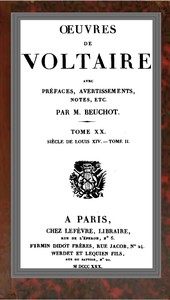
Œuvres de Voltaire Tome XX: Siècle de Louis XIV.—Tome II by Voltaire
So, what's actually in this book? This isn't a novel with a single plot, but a detailed examination of the second half of Louis XIV's monumental 72-year reign. Think of it as the season finale of a dramatic historical series.
The Story
Voltaire picks up where the first volume left off, moving from the king's early triumphs into the more complicated later years. He walks us through the major European wars—like the War of the Spanish Succession—that expanded France's borders but left it financially wrecked and hated by its neighbors. He doesn't shy away from the human cost. Alongside the military history, he chronicles the dark policy of persecuting Protestant Huguenots, which forced hundreds of thousands to flee, stripping France of skilled workers and sowing deep resentment.
But here's the cool part: Voltaire balances this with chapters dedicated entirely to the flourishing of culture. He gives us snapshots of the era's giants—playwrights like Molière, scientists, philosophers, and artists. He shows a court dripping in splendor at Versailles, all while the country's foundations were slowly straining under the weight of constant conflict and religious intolerance.
Why You Should Read It
You should read this because Voltaire is a phenomenal narrator. He's not a detached historian; he's a sharp commentator with strong opinions. His prose is clear, often witty, and packed with pointed observations about power, faith, and human nature. Reading him, you get a real sense of the intellectual ferment of the time. He makes you feel the contradiction of the age: how so much beauty and intellectual progress could exist alongside so much authoritarian control and misery. It’s history told with a personality, which makes all the difference.
Final Verdict
This is perfect for anyone who loves history but finds typical academic writing a slog. It's for the reader who wants to understand not just what happened, but how a contemporary thinker felt about it. If you enjoyed shows like Versailles or books that explore the gap between a ruler's propaganda and their people's reality, you'll get a lot out of this. Fair warning: it's a direct translation of an 18th-century text, so the pacing and structure are different from a modern book. But if you're up for a challenging, insightful, and conversation-starting deep dive, Voltaire's your guide.
There are no legal restrictions on this material. Share knowledge freely with the world.
James Scott
10 months agoI started reading out of curiosity and it creates a vivid world that you simply do not want to leave. A true masterpiece.
Barbara Torres
11 months agoGreat reference material for my coursework.
Emma Smith
11 months agoClear and concise.


Melissa Jackson
1 year agoComprehensive and well-researched.