1

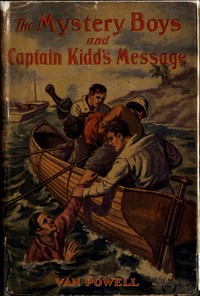
The Mystery Boys and Captain Kidd's Message — Key Ideas to Explore
(0 User reviews)
2273
Project Gutenberg
2016
Not confirmed
Detective and mystery stories; Pirates -- Juvenile fiction; Mystery fiction
Readers of public-domain and historical texts
Project Gutenberg digital edition
en
Edition facts
Words
58,104
Reading time
253 min
Text sections
9
For The Mystery Boys and Captain Kidd's Message — Key Ideas to Explore, the stored edition analysis reports 58,104 words, 4 hr 13 min estimated reading time, and 9 detected text sections.
The text analysis averages about 15.1 words per sentence, while the detected sections provide another way to judge how the source is divided.
Project Gutenberg metadata also associates the work with “Detective and mystery stories,” connecting these edition facts with the source record’s subject description.
Source:
Project Gutenberg record #53515
An editorial note on Van Powell's 1931 mystery, focusing on its narrative voice, pacing shifts from dialogue to action, and the use of sensory details like sun-gazing and water sounds to build suspense.
Read the complete public-domain text at its original source.
Read on Project GutenbergThe opening chapter of The Mystery Boys and Captain Kidd's Message immediately establishes a distinctive narrative voice through the boys' dialogue. Nicky's impulsive questioning—"What is the matter with that colored boy?"—sets a tone of restless curiosity, while Tom and Cliff offer more measured responses. The text lingers on small, puzzling details, such as the boy's repeated glances at the sun, creating a sense of unease that propels the scene forward. This interplay between spoken words and unspoken tension recurs throughout the excerpts, where whispered exchanges and cautious movements often precede bursts of action.
Dialogue as a Driver of Pace
The narrative frequently accelerates through rapid-fire exchanges. In the opening, Nicky's persistent questions—"But why does he look up at the sun?"—push the scene from observation to confrontation. Later, during the boat escape, commands like "Pull hard on your port oar" and clipped responses ("Right-o!") create a staccato rhythm that mirrors the urgency of the moment. These dialogues are not merely expository; they reveal character traits—Nicky's impulsiveness, Tom's caution, Cliff's strategic thinking—while keeping the plot moving. The author often breaks longer descriptive passages with short lines of speech, effectively controlling the reader's sense of time.
Sensory Details and Atmospheric Tension
Van Powell builds suspense through specific sensory cues. The sun, described as "about two hours high," is not just a time marker but a focal point for the boy's strange behavior. Later, the water is "limpid," and the listing boat's rail "almost dipp[ed] into" it, grounding the scene in tactile and visual detail. Sounds are equally important: the "gruff hail" from the unknown vessel, the "sounds of voices" from the cabin, and the "oaths" of trapped men all contribute to an auditory landscape that heightens tension. These details are never superfluous; they anchor the reader in the physical world of the story, making the sudden shifts to action more impactful.
Shifts Between Stealth and Action
The excerpts show a clear pattern of quiet, careful movement followed by sudden, decisive action. The boys "tread water" and "crept closer" before climbing aboard, their motions described with verbs like "slipped" and "crept." This stealth phase builds anticipation, often punctuated by whispered dialogue. Then, action erupts: doors slam, a boat is captured, and the boys row away "with all their strength." The pacing mirrors a classic adventure structure—calm observation, tense preparation, explosive event—but the author varies the length of each phase. The escape sequence, for instance, compresses multiple actions into a few paragraphs, while the initial encounter with the boy unfolds more slowly, allowing curiosity to simmer.
Readers may find it useful to note how the author balances the boys' collective voice with individual traits. Nicky's impulsiveness often triggers plot developments, while Tom and Cliff provide counterweights. Pay attention to the way the narrative lingers on physical sensations—the heat of the sun, the feel of water—as these moments often precede key turning points. The story's rhythm rewards close attention to dialogue and description alike.
There’s something about the way Van Powell lets the sun-glow and the lapping water carry the tension in The Mystery Boys—a quiet patience that feels rare now. It stays with you, like a half-remembered afternoon. I found that same unhurried ache in When the Sea Gives Up Its Dead: A Thrilling Detective Story — Text and Context, where the salt air itself seems to hold a secret.
There are no reviews for this eBook.
There are no comments for this eBook.
Reader reflection
Take a moment to reflect on this book
Create a short personal record of your experience with this book.
Your progress
0
/
10
2
Did this book hold your interest?
3
How likely are you to recommend this book?
4
How easy was the book to follow?
5
What was its emotional impact?
6
Is this a title worth rereading?
7
How understandable was the text?
8
What did you think about the pace?
9
Which lesson or insight stayed with you?
10