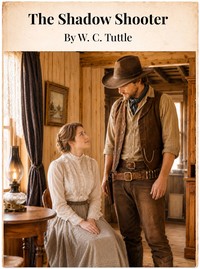
The shadow shooter — Text and Context
Edition facts
The source record for The shadow shooter — Text and Context measures this digital text at 53,158 words, 3 hr 52 min estimated reading time, and 8 detected text sections.
The text analysis averages about 11.3 words per sentence, while the detected sections provide another way to judge how the source is divided.
Project Gutenberg metadata also associates the work with “Western stories,” connecting these edition facts with the source record’s subject description.
Calculated from edition completeness, EPUB availability, text structure and catalogue metadata. Not a user rating.
How this score is calculated
- Description quality20 pts
- Title & short description10 pts
- Source metadata20 pts
- Text length15 pts
- Chapters / structure15 pts
- EPUB file integrity20 pts
Total of 100 points, scaled to a 2.5-5.0 range. Editions with an empty description or a missing EPUB file are not scored.
Read the Text
S ranch to bring Yvonne LeClere to the dance.
The IS was located about four miles north of Chongo, while the AH was about the same distance from town, slightly north of east. Soapy was not in a good humor, due to the misfit of his new suit and hat. It had taken him quite a while to accumulate that forty dollars which they represented, as Soapy was not a frugal soul and forty a month does not allow for much saving.
“She’s a total loss,” he told his horse. “Won’t even make good cleanin’ rags for a six-gun. If old P. T. Barnum was alive he’d shore pay a whoppin’ salary to the man who could fit into that suit. Thirty-one coat and thirty-nine pants! And a hat fit for a peanut! But that’s what yuh get for lettin’ a waddy measure yuh.”
And then Soapy’s thoughts drifted away from the suit and centered on Yvonne LeClere. He couldn’t for the life of him quite understand why Yvonne should accept his invitation to the dance; why he was favored above the rest. Soapy was not at all vain or egotistical. He could look at himself in a mirror and see himself as others might see him. He was neither handsome, graceful, intellectual nor wealthy; just a forty-a-month cowboy trying to get along. He had known Yvonne before her father sent her away to school, where she had stayed four years, but they had never been intimate friends. She had been sort of a wild kid, with big black eyes, red lips and a mop of unruly black hair. She rode like a wild thing; rode any horse she could mount, much to the amusement of old Frenchy LeClere, who swore great oaths that Yvonne could ride better than any puncher in Silver River Valley.
Old Frenchy was proud of Yvonne. His eyes always snapped when her name was mentioned.
“She’s de LeClere blood,” he would declare, striking himself on his broad chest. “Better man den Joe. Joe--well, she’s not so good. She’s not bad boy--Joe; jus’ wild.”
Silver River Valley had its own opinion of Joe LeClere. Joe was five years older than Yvonne, who was barely twenty. He was dark, with black eyes and a cruel mouth. And he was wild, was Joe LeClere; wild rider, wild drinker, wild gambler. He trailed with a wild crowd.
Frenchy LeClere did not remonstrate with Joe, because Joe was of age now. But one day when Joe was eighteen his father knocked him down with the neck-yoke of a wagon. After doctoring him back to consciousness he said:
“W’en I say somet’ng, I mean no! No, she’s not yes. Nor she’s not maybee. Me, I’m not like strike child wit’ feest; so I’m tak’ neck-yoke and hit you so--hard, maybee you remember for t’ree year more that I am boss. After dat I’m don’ give hell. You can’ go way and say I’m don’ raise you right, by God!”
And Joe had remembered to the best of his ability. In spite of his wild blood, he had a lot of respect for his big, spade-bearded, white-haired father. The neck-yoke probably did much to gain this respect.
Soapy rode in at the ranch-house and Frenchy LeClere met him at the doorway, his broad figure back-lighted by a huge lamp on the table.
“Ho, ho, ho, ho!” he laughed rumblingly. “By gosh, ’ere’s de cowboy come for you, Yvonne! Shak’ leg! Come in, Soapee. H’all polish up, eh?” He slapped Soapy on the shoulder so hard that the cowboy half flinched.
“Hyah, Mr. LeClere!” he grinned.
The old man lifted his bushy brows and stared at Soapy.
“So-o-o? Mistaire LeClere, eh?”
“Gotta be polite,” grinned Soapy.
“Biccause you tak’ my girl to de dance, eh? You never mind be polite to me; you be polite to her.”
“Shore thing, I will,” said Soapy seriously.
“Rest de feet, eh?” grinned Frenchy LeClere, indicating a chair.
Soapy sat down on the edge of the seat, while the old man sat down in an ancient rocker, which creaked ominously under his weight.
“Joe at home?” asked Soapy after a silent moment. The old man frowned slightly, but finally lifted his brows and looked at Soapy.
“She’s not here--no. Joe she’s spend mos’ time in town. I dunno,” he shook his head sadly. “She’s h’all right biffore de railroad come to Chongo. Railroad bring de gambler, de women. Mak’ new building, too. Chongo grow beeg. I’m sorry. We ’ave de nice li’l town, h’everybody happy; now she’s h’all go to hell, I’m guess.”
“I don’t like it myself,” said Soapy earnestly.
“Bimeby comes de barb-wire, nester, mebby sheep.”
“I’ll pull out ahead of that.”
“You are yo’ng; you can go some place. But I am old and I mus’ stay. I’m t’ink Yvonne he’s coming now. You bring de buggy?”
“By golly, I never thought of it! I ain’t never taken--”
“Never min’; you tak’ my rig, Soapee. You talk wit’ Yvonne w’ile I’m hitch up de horse.”
And before Soapy could protest against it, Frenchy went out through the rear of the house. A moment later Yvonne came in. She stopped just inside the room and smiled at the speechless Soapy.
She was wearing a flame-colored silk dress which fit her perfectly, a black lace mantilla gracefully draped over her head and shoulders, causing her to look more Spanish than French. Her big eyes sparkled and her red lips parted to show a flash of white teeth as she smiled at the dumbfounded cowboy.
“How do you like me?” she asked.
“My God!” breathed Soapy. “You--well, I’ll--hello, Yvonne.” He smiled foolishly and blinked at her.
“Gosh! I--say, I saw a picture once that looked just like you.”
“Yes? Where’s Father?”
“He’s--uh--say, Yvonne, I plumb forgot to bring a rig, and he--he’s gone out to hitch up one.”
Yvonne laughed softly and crossed to an old mirror.
“You are not used to taking ladies to dances, eh?” she said, not turning her head.
“I shore ain’t. Gosh, that’s a pretty dress, Yvonne. You’ll have all them Chongo women green with envy. I--I--” he looked down at his suit--“I ain’t--yuh see, I got a new suit today. Had her shipped from Chicago. But Cling Heffner measured me for it and he shore got the figures shifted. They sent me a thirty-one coat and thirty-nine pants. What you think of that?”
Yvonne laughed with him and turned from the mirror.
“Never mind clothes,” she said. “You look fine.”
“I guess I don’t _look_ fine, but I shore feel fine. I reckon I know how Cling would feel if he ever drawed a royal flush in the middle.”
“That’s luck,” she said.
“What do you mean, Soapy?” She looked straight at him.
“Why, me gettin’ a chance to take you to a dance. I’ll bet there’s men in Chongo that would give a leg to have my chance.”
Her eyes clouded a trifle and she turned back to the mirror.
“Don’t be foolish,” she said. “I--I didn’t want to go with any of the men from Chongo. This is my first dance here since I came from school, you know.”
“Yeah, that’s right. Well, I shore had a horseshoe with me when I asked yuh to go, Yvonne. By golly, you shore do look fine. If that danged suit had only--”
“That’s Dad yelling that the rig is ready,” interrupted Yvonne. “We’ll go out through the kitchen.”
They found Frenchy LeClere out there with the single rig, and he held the horse while they got in the buggy.
“I’ll leave my bronc here,” said Soapy. “Thank yuh a lot, Mr. LeClere.”
“Have good time,” LeClere laughed as they drove away.
It was moonlight, but Soapy held the horse down to a walk. He was conscious of the fact that he had eaten onions for his supper. The buggy seat was small, which forced them to sit close together.
“I wish we was drivin’ to the moon,” said Soapy.
“To the moon? My, my! That is a long way, Soapy. Why, it would take a million years to drive to the moon.”
“Time jist don’t mean nothin’ to me, Yvonne; I wish there was a road up to it.”
For many years the town of Chongo had been a cow-town, drowsing away in Silver River Valley; nothing more or less than a one-street village, seemingly content to stay as it was, only growing more weather-beaten each year.
Then came the railroad, a branch line, of course, to wind its way up Silver River to Chongo town. And with the railroad came a change in the county seat, bringing it to Chongo, which was in the center of the county.
And simultaneous with the advent of the railroad came the silver strike on Chongo Creek, twelve miles northeast of the town. All these things caused Chongo to boom, and boom it did--to a certain point. Came more saloons, two big gambling houses, honkatonks. A race-track was built just outside the town, where the local cow-horses fought for quarter-mile honors each Sunday. The stakes were usually horse-for-horse, with betting as a side issue. In other words, the winning horse won all the rest of the horses in the race.
Tuck Hayward was one of the big men of Chongo. He owned the Box 88 cow-outfit and the Silver Streak saloon and gambling-house. The gambling-house had been built after the railroad started construction and after Tuck had received the contract to furnish meat to the railroad construction camps.
Frenchy LeClere had tried hard for this contract, but he did not understand politics as well as Tuck; so Tuck got the contract and laughed at Frenchy LeClere. All of which did not please Frenchy, whose herds were dwindling slowly but surely from some unknown cause.
“Fat” McAllister, the sheriff, scouted the idea that some one was stealing IS cattle, but the old man was insistent; and he thought he knew more about it than the sheriff did. Frenchy appealed to the Cattle Association and received considerable correspondence but no action.
After the big silver strike on Chongo Creek Frenchy LeClere tried to get the contract to furnish meats to the mines but found that Tuck Hayward had already taken the contract and was killing his beef at the mines.
Tuck Hayward was a big man physically, inclined to stoutness, although not yet forty years of age; cold-blooded in all his dealings, inclined to bluff his way through life, hampered somewhat by a high-pitched voice which did not blend well with the rest of his make-up.
His crew consisted of “Dunk” McLeod, Hal Cornes, Len Asher, Mike Dalhart and “Kid” O’Neil. Asher and Cornes spent most of their time at the Chongo camps, handling the butchering.
O’Neil was fairly new to Silver River Valley; a small, sinister-looking person with thin, dark face, keen eyes, sharp nose and a mop of coarse black hair. But the kid was a cow-hand of the first water, quiet and unassuming, until full of liquor, when he became both loquacious and dangerous. He had worked a while for Frenchy LeClere, but the old man had fired him, and he had gone to work for the AH, only to start trouble in a bunk-house poker-game and get fired again. Tuck Hayward took him on at the Box 88, where he seemed to be getting along all right, after two bad starts in the valley.
In Tuck Hayward’s private office at the rear of the Silver Streak sat Hayward and Joe LeClere. It was a tiny office, barely large enough to contain an old roll-top desk, a small, fire-proof safe and a couple of chairs, besides Tuck’s big leather-covered swivel-chair.
The desk top was littered with silver ore samples, a half-empty bottle of liquor and other odds and ends. Tuck was wearing a gray suit which fitted him to the bursting point, a blue shirt and a scarlet tie, looped through a huge ring, set with a five-carat yellow diamond.
There was nothing gaudy about Joe LeClere. He wore a black shirt of coarse material, an old gray vest, over-alls tucked in the tops of his boots, and on his knee rested a well-worn black sombrero. His cartridge belt was studded with silver rivets, tarnished to blackness, and the butt of an old single-action Colt protruded from his scarred holster.
Joe had been drinking but was not drunk, and his somber eyes studied the big face of Tuck Hayward closely.
“Who’s bringin’ yore sister to the dance tonight, Joe?” asked Hayward.
“I dunno,” indifferently.
“She never told me.” Joe was still indifferent.
“You knew I asked her to come with me?”
“The hell he did! How do yuh know that?”
Joe rubbed his nose reflectively.
“Yea-a-ah? You heard him, eh? What did she say?”
“’Bout the same thing she told you, I suppose.”
Hayward spat viciously and helped himself to a cigar from a box on the desk. He did not offer one to Joe.
“You couldn’t expect her to go with you, Tuck,” said Joe softly. “You and the old man--”
“Oh, to hell with the old man!”
“Well,” said Joe resignedly, and after a short reflection:
“Yuh couldn’t expect her to go with O’Neil. He got drunk the day she came home from school and tried to kiss her. She slapped hell out of him and when she got through the old man pitched him out on his head.”
“I didn’t expect her to go with Kid O’Neil,” coldly.
“Did you expect her to go with you, Tuck?”
“Why in hell do yuh suppose I asked her, you damn fool?”
Joe laughed shortly and his right hand twitched just a trifle. Hayward rolled the cigar between his lips reflectively.
“Joe, have you any idea how much money you owe me?”
Joe started slightly.
“I--I never figured on it much, Tuck.”
“Uh-huh; I didn’t think yuh had.”
Tuck reached in his desk and brought out a much-thumbed ledger, which he perused thoughtfully. Then he closed it and put it back in the desk. Joe’s eyes were uneasy and he began to realize that his credit had been too good at the Silver Streak.
“You ain’t closin’ down on me, are yuh, Tuck?” he asked uneasily.
“Not yet; but you’ve got to go easy.”
“You can’t very well--” began Joe softly.
“Drop that, Joe!” Tuck’s voice had a dangerous ring.
“I didn’t mean to say that,” said Joe weakly.
“Yo’re damn right yuh didn’t. Don’t never pull anything like that again on me. I’ll cut you off any old time I feel like it. You’d be a damn sight better off if I did. You drink too much rot-gut, Joe. Taper off, will yuh? I guess that’s all. Find out who brought yore sister to the dance.”
“Oh, all right,” said Joe, getting to his feet. “I’ll let yuh know, Tuck.”
He walked out into the gambling-room and came down past the long bar where two bartenders were filling the wants of those present. Cling Heffner was at the bar and Joe stopped beside him.
“Goin’ to the dance?” asked Joe, accepting Cling’s invitation to have a drink.
“Might wiggle a hoof or two,” grinned Cling, “if I can git some girl to dance with me.”
“Didn’t you bring a pardner, Cling?”
“Rest of the boys in from the AH?”
“Johnny and Slim are around somewhere, I reckon. Soapy went out after yore sister.”
“Yeah--the lucky devil.”
Joe laughed shortly and motioned for the bartender to pass out the glasses again.
“She’s shore an attractive girl,” said Cling.
“Seems to be the general opinion. Well, here’s how.”
Cling happened to be a fairly good two-fisted drinker; so they had several rounds of the potent bar-whisky, which, added to what Joe had already imbibed that evening, caused Joe to grow expansive.
“You folks lost any cattle?” asked Joe.
“Kind of a funny question, ain’t it?” inquired Cling.
“Oh, I heard that the IS claims a steady loss. Fat Garnette was out and talked with Hart about it. Fat don’t believe it. He says yore old man’s full of prunes. Where would a rustler dispose of cattle? Yuh never could ship stolen cattle out of here. Brand inspection is too close. Even a butcher has got to produce a branded hide.”
“I know all about that, Cling. Well, here’s luck.”
As they finished their drink Kid O’Neil and Mike Dalhart came in, evidently coming from the dance hall, because neither of them wore a hat. They came to the bar and ordered their drinks, O’Neil standing next to Joe LeClere.
“Aw, I’d forget it if I was you, Kid,” advised Dalhart, as he filled his glass to the brim.
“Yeah, but I’m not goin’ to forget it,” growled the Kid. “I’m as good as Soapy Weed, by God! She turned me down for that screw-nosed waddy, didn’t she? And then she won’t dance with me. ‘Thank yuh kindly,’ says she. Huh! No damn Canuck female can make a fool out of me, I’ll tell yuh that, and I don’t care who knows it.”
The Kid swallowed his liquor at one gulp, slammed the glass on the bar and turned toward Joe LeClere. He had spoken loud enough for Joe to hear every word and now he scowled at Joe, as much as to invite him to comment on his words.
Joe’s right hand was hanging at his side, his left elbow on the bar, and without any shift of his body he brought up his fist in a sweeping smash, landing it full on Kid O’Neil’s nose. The Kid’s face seemed to flatten under the impact of the blow; then it jerked sideways, and Kid O’Neil struck his chin on the bar as he promptly went to his knees on the rail.
Joe sprang back, his numbed right hand dropping to the butt of his gun, as Cling sprang between them, throwing one arm around Kid O’Neil’s shoulders while with the other he removed the Kid’s gun from inside the waist of his pants.
The Kid struggled to his feet, his face bathed in gore, trying to find his gun, to stop the blood. The place was in an uproar for several moments until Tuck Hayward arrived and took charge of the situation. The bartender gave the Kid a towel. Hayward demanded an explanation of the trouble and Cling told him what the Kid had said.
Hayward grunted angrily as Dalhart tried to alibi the Kid.
“His nose is busted,” said one of the cowboys. “Better get a doctor, Tuck; he’s losin’ a lot of red ink.”
Some one went for the doctor and Cling took Joe outside.
“I could love yuh for pokin’ him, Joe,” said Cling, “but I’d honestly advise yuh to go home. Dalhart is ready to lie for the Kid and the rest of the Box 88 will back his play. I know you’ve got plenty nerve, Joe; but yo’re badly outnumbered. I’ll tell Soapy about it and he can do as he pleases.”
“I won’t run,” said Joe stubbornly.
“Nobody expects yuh to. Oh, do as yuh damn please about it, of course. I’m not yore guardian. Only, the Kid is a bad hombre and he won’t forget that punch.”
“I guess I’m kind of a damn fool,” said Joe bitterly. “I’m much obliged to yuh, Cling, and I’m goin’ home. You tell Soapy I went home, will yuh?”
“Shore, I’ll explain it all to him. I just want yuh to know I’ve got a lot more respect for yuh since yuh hit that geezer, Joe. If you’d cut loose from Tuck Hayward, yuh might do well before yuh die of old age.”
“Well, I’ll see yuh later, Cling.”
Cling went back to the saloon and gave the Kid’s gun to the bartender. They had taken the Kid to the rear of the room, and as Cling passed the gun across the bar the doctor came in. Some one directed him to the back of the room and Cling followed.
The excerpts from W. C. Tuttle's The Shadow Shooter open not with a gunfight but with a comedy of errors: Soapy Weed, squeezed into a mail-order suit that is both too tight and too loose, stands in a bunkhouse under oil lamps, his trousers falling to the floor. The humor is broad and physical, driven by exaggerated measurements and a deadpan sidekick named Cling. This initial scene—a full page of banter about a thirty-one-inch coat and a thirty-nine-inch waistband—sets a tone of absurdity that contrasts sharply with the later, grimmer events.
From Farce to Felony
The tonal shift in the excerpts is abrupt. After the suit-fitting farce, the narrative moves to a jailhouse where jailer Chuck Haverty has been knocked out and prisoner Joe LeClere shot. The language becomes clinical: Sleepy notes “dried gore on his shirt,” and Hashknife finds a .45 caliber bullet “with the nose only slightly battered.” The earlier slapstick—Soapy kicking his trousers against the door—gives way to a procedural discussion of wound placement and time of death. Tuttle uses the same characters in both modes, but their voices change: Cling’s grin wrinkles are replaced by Weary’s cursing as he rides to notify Joe’s family. The catalog lists “Mystery fiction” and “Western stories,” but the excerpts show a mystery that begins with a punchline.
Evidence Over Action
The investigation in the excerpts is notably static. Hashknife and Sleepy sit on a hitch-rack, smoking, while the town gathers. Hashknife admits, “It’s goin’ to take more luck than brains to find out who shot Joe.” The clues are minimal: a bullet, a time window between nine and nine-thirty, and the fact that the shot was fired while Chuck was unconscious. The catalog subjects include “Cattle stealing” and “Cowboys,” but the excerpts contain no rustling, no pursuit, and no range action. Instead, the focus is on the sheriff’s embarrassment and the fiddler’s payment. This suggests the mystery may be more about deduction than chase, though the excerpts are too brief to confirm the full plot.
Voice and Vernacular
Tuttle’s dialogue is dense with period slang and phonetic spelling. Soapy’s “H-e-e-y!” and Cling’s “holee gee” establish a comic register, while later lines like “They busted me in the cranium” maintain a folksy tone even during violence. The narration is spare, letting characters speak for themselves. The excerpts also show a fondness for descriptive names: “Clinging Vine” Heffner, “Soapy” Weed, “Hashknife” Hartley, “Sleepy” Stevens. These monikers, along with the mail-order suit and the fiddle serenade, root the story in a specific, self-aware Western vernacular that the catalog’s generic “Western stories” label only hints at.
Readers should note that the excerpts cover only the opening and a middle section; the full novel may develop the cattle-rustling and cowboy themes listed in the catalog more fully. The evidence here suggests a hybrid work—part comedy of manners, part locked-room mystery—set in a jail rather than on the open range. Pay attention to how Tuttle balances the two tones, and whether the humor undercuts or complements the crime plot.
That rainy afternoon, the .45 caliber bullet in The Shadow Shooter weighed heavier than the slapstick suit. I kept thinking about evidence—what a story leaves behind. Later, idly tracing that thread, I found Nick Carter Stories No. 138 May 1, 1915; The Traitors of the Tropics; or, Nick Carter's Royal Flush — Context and Discussion offered a different kind of clue—a royal flush, not a bullet. Just two ways of reading a room’s silence.
There are no reviews for this eBook.
Take a moment to reflect on this book
Create a short personal record of your experience with this book.
Joseph Brock - 1 month ago
Laurie Lynn Fox - 3 weeks ago
Mark Robles - 3 weeks ago