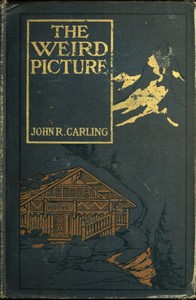
The Weird Picture — Key Ideas to Explore
Edition facts
The source record for The Weird Picture — Key Ideas to Explore measures this digital text at 84,117 words, 6 hr 6 min estimated reading time, and 8 detected text sections.
The text analysis averages about 16.7 words per sentence, while the detected sections provide another way to judge how the source is divided.
Project Gutenberg metadata also associates the work with “Triangles (Interpersonal relations) -- Fiction,” connecting these edition facts with the source record’s subject description.
Calculated from edition completeness, EPUB availability, text structure and catalogue metadata. Not a user rating.
How this score is calculated
- Description quality20 pts
- Title & short description10 pts
- Source metadata20 pts
- Text length15 pts
- Chapters / structure15 pts
- EPUB file integrity20 pts
Total of 100 points, scaled to a 2.5-5.0 range. Editions with an empty description or a missing EPUB file are not scored.
Read the Text
Such was the letter received by me, Frank Willard, student in Odenwald College, Heidelberg, on the first day of the last month of the year. The writer of the letter was my brother, a captain in the--something. I take a pride in not remembering the number of the regiment, for I am a man of peace and hate war and all connected therewith, excepting, of course, my soldier-brother, though my affection for him had somewhat waned of late years, for a reason that will soon appear.
The letter was accompanied by a portrait of George, an exquisite little painting in oils, representing him in full-dress uniform. A glance at the mirror showed how much I suffered by comparison. He looked every inch a hero. I looked--well, no matter. In the lottery of love the prizes are not always drawn by the handsome. The Daphne referred to was our cousin, a maiden with raven hair, dark blue eyes, and a face as lovely as a Naiad's.
Her father, Gerald Leslie, was a wealthy city merchant, who, after the death of our parents, became the guardian of George and myself, bestowing on us a warmth of affection and a wealth of pocket-money that made the transference to his roof seem rather desirable than otherwise, my own father having been of a somewhat cold and undemonstrative temperament. However, _de mortuis nil nisi bonum_.
My first impulse on reading the above letter was to pen a refusal to the invitation.
"What!" it may be said. "Refuse to be present at your brother's wedding? Refuse to return home to old England at Christmas-tide?--a season dear to every Englishman from its sacred and festive associations. 'Breathes there the man with soul so dead,' etc."
Exactly. My soul _was_ dead, both to the joys of Christmas and of Daphne's wedding. Four words will explain the reason: I myself loved Daphne. And I had told her so, only to find that she had given her heart to my brother George.
I am not going to fill this chapter with the ravings of disappointed love. Suffice it to say that in my despair I left England, determined to see Daphne no more, and betook myself to the university of Heidelberg with the hope of finding oblivion in study.
Greek choruses, strophes, antistrophes, and epodes, are, however, all very well in their way, but they are a sorry substitute for love. At any rate, they did not make me forget Daphne. Her sweet face continued to haunt me, and, in the despairing and romantic mood of a Manfred, I spent many a night on the mountains around Heidelberg, watching the stars rise, and brooding over my unrequited love.
Thus my brother's letter was far from being a source of pleasure to me, though it was kindly meant on his part (for he was ignorant, so I subsequently learned, of my own love for Daphne). His invitation, translated into the language of my thoughts simply meant, "Come and be more unhappy than you are!"
Deep down in my heart I had cherished the belief that something unforeseen would happen to break off George's engagement. The sands of that hope were now fast running out. The 25th of the month would remove Daphne from me forever.
For several days I fought with my despair, but at last I resolved to be present at the wedding.
"I may as well play the stoic," I muttered, "and accept the inevitable. Perhaps the fact of seeing Daphne actually married to another will cure me of this folly."
Curiosity, also, to see how Daphne would behave on the occasion was an additional motive for going; and, poor fool that I was, I thought of the trembling handclasp, the blush, and the sweet glance that a woman seldom fails to bestow on the man who has once expressed his love for her.
Christmas Eve, midnight, found me on board the packet-boat steaming out of Calais Harbour. The sea was singularly smooth, and there was in the air that which gave promise of a heavy fall of snow ere long. Wrapped in my cloak, I leaned over the side of the vessel, listening to the silver carillon of the church-bells pealing forth from every steeple and belfry in the town the glad tidings that the sweet and solemn morn of the Nativity had dawned. Faintly and more faintly the chimes sounded over the wide expanse of glimmering sea, till they were finally lost in the distance.
At first my thoughts were gloomy. To play the stoic is never a very pleasant task. Yet I was not totally abandoned to despair. A ray of hope played over my mind, and, as the distance that separated me from Daphne diminished, this hope gradually became stronger and stronger. _Nil desperandum_ should be my motto. The wedding had not taken place yet; weddings have been broken off at the very altar: why should not hers be? Foolish though it may seem, I began to nurse the pleasing idea that Fate might yet transfer Daphne to my arms. As if my wish had become a certainty, I trod the deck of the Channel steamer with exultant step, refusing to go below, although the wintry flakes were falling now in steady earnest. Such is the power of hope over the human mind; or is it something more than a poetic fiction that coming events cast their shadows before?
I was roused at length from dreamland by the sight of Dover Harbour looming through the snow-dotted gloom of night.
At the pier-head a lantern shone, and among the persons assembled beneath its light a soldierly-looking figure in a long grey coat was visible. It was my brother George. His presence on the pier seemed, in my excited state of mind, a confirmation of the daring hope I had begun to entertain.
"The dear fellow!" I murmured. "He has come down expressly to meet me, and to resign Daphne to me."
As our vessel drew alongside the pier I waved my hand to him, but at this greeting he instantly vanished. This was certainly a surprise. Why did he not await my landing?
I was the first to quit the steamer, and, emerging from the inspection of the Revenue officials, I looked eagerly around for my brother. He was not to be seen on any part of the pier.
Was I mistaken as to the identity? The figure, the face, the very carriage--all seemed to be his. Stay! Was this an ocular illusion! Had my mind been dwelling so earnestly on my brother as to stamp on the retina of my eye an image that had no corresponding objective reality outside myself? Would this account for the peculiar manner in which the figure had vanished?
I would soon put this theory to the test. If George had come by train from London, the servants at the station would surely retain some remembrance of him. If others had seen the figure in the grey cloak, it would be a proof that my sense of sight had not deceived me. I entered the station and sought knowledge from the first porter I met, a tired-looking youth, with a sprig of holly stuck in his buttonhole, who gaped vacantly at my questions till the glitter of a silver coin imparted a certain degree of briskness to his faculties.
"A military-looking gent, sir? Yes, there was one on the platform a few minutes ago."
"Describe him," said I bluntly, as my fellow passengers from the boat began to crowd into the station. "What was he like?"
I was desirous of drawing a description of the "military-looking gent" from the porter's unassisted memory rather than of suggesting personal details, to which, in his half-sleepy state and in his desire to get rid of me, he would doubtless subscribe assent.
"Well, sir, he wasn't very tall--at least, not for a soldier; but then Bonaparte wasn't----"
"Oh, hang Bonaparte! Go on," I said snappishly, for I was cold, hungry, and tired--conditions that do not tend to improve one's temper.
"He was wearing a long grey cloak and had a travelling-bag with him, marked with the letters "G.W." I noticed the bag particularly, because it came open as he was stepping from the carriage. My! didn't he shut it sharp! quick as lightning, as if he didn't want any one to see what was inside. I offered to carry it for him, and he told me----"
"To go to the devil!"
"You didn't go, I see," said I, attempting to be facetious. "Well, go on. What about the man's face?"
"Face? He looked rather white and excited; perhaps because he was in a passion with the carriage-door; it didn't open easily. He had a dark scar on his temple, and----"
"Left or right temple?"
George had a dark scar on his left temple, the relic of a fall from a cliff at Upsala. His initials too were "G.W." Good! The figure on the pier was not an illusion, then. The porter's words convinced me that the man he had seen was my brother.
"How long is it since he was here?" I inquired.
"How long?" repeated the official, jerking his head backwards to get a glimpse of the Station clock. "Only ten minutes since. He came down by the express from Charing Cross. It was a few minutes late owing to the snow."
"Do you know if he had a return ticket?"
"What's the next train to London?"
"One just on the move now, sir. The next in two hours' time. Better travel by this one. The next is sure to be a slow one, this snowstorm is so heavy. Going by this one, sir?" he continued, swinging open a carriage-door as he saw my hesitation. "Only a minute to spare."
"I--I don't know yet. Hold my portmanteau for a moment."
I quickly ran the whole length of the departing train, but the grey coat was not in any of the carriages. This train was the one I should have travelled by, its departure being timed for the arrival of the Continental boat; but I now resolved to delay my journey till the next, in order to travel in company with my brother, for George must return by the latter train, otherwise he would be barely in time to meet the wedding-party in the Church at half-past nine. I returned to the porter, who was surveying me with a curiosity, the reason of which soon became evident, and said:
"I shall travel by the next train. Take charge of my portmanteau until then."
"Right you are, guv'nor! What's he done? Forgery? Murder? He looks quite capable of it."
"Done? Who?" I said, astounded at this sudden familiarity.
"Why, the military cove!" returned the youth. "It's no go; I can see you're a 'tec with half an eye."
I suppose the half-eye that had discovered so much was his right one, for he proceeded to diminish it by screwing it up into a wink expressive of the penetration of its owner.
"The gentleman whom you think capable of forgery and murder is my brother, Captain Willard, of the--the never you mind; and if you give me any of your insolence, I'll report you to the authorities," I said, wrathfully.
The porter, who had evidently been drinking, was a little taken aback, to judge by his ejaculation of "Oh lor!" and as I walked off with my grandest air, I heard him mutter:
"His brother! yes, and like him, too! The one sends me to the devil, and the other threatens to report me to the station-master. Oh, they're brothers, sure enough! By your leave, there!"
A multitude of questions came surging over my mind. What was George doing at Dover only a few hours before his wedding? Obviously his purpose was not to meet me, since he had avoided me. Why? Could it be that for some strange reason he was deserting Daphne on her bridal morning?--a thought that caused my pulses to throb quickly. Was it shame, or guilt, that had kept him from facing me? Oh, if I could but find him, and learn the truth from his lips!
"On the platform ten minutes ago."
Absurd as the idea may seem, I resolved to walk the streets of Dover during the next two hours, on the chance of meeting him.
The weather was of the character that popular fancy rather than historic fact has ascribed to the Yuletides of bygone days under the name of "an old-fashioned Christmas." The snow was lying several inches deep in the streets, deadening the sound of my footfalls. The big flakes, still falling, blinded my vision with their whirling eddies. Not a soul was to be seen out of doors. Not a sound was to be heard save the sea splashing faintly against the harbour walls. The town lay draped in white, a city of the dead. Not knowing in what direction to proceed, I walked on as chance directed, without seeing the person I was in quest of. Presently, as I was turning a corner, a figure, white as a ghost from head to foot, came into sight, startling me for the moment. It was a constable, and I questioned him.
"I saw a man in a grey cloak go by just three minutes ago."
"Carrying bag marked 'G.W.'?"
"Carrying _a_ bag, sir," he replied, with marked emphasis on what the grammarians were wont to call the indefinite article. "I didn't notice any letters on it. If you hurry you'll catch him up. He went that way," pointing with his hand. "Is anything the matter? Can I be of assistance?"
"I don't understand you," I returned sharply, wondering whether he, too, like the railway-porter, thought that my brother was a fugitive from justice.
"No offence, sir, but your friend seems to need looking after. He is either mad or dying. His eyes burned like live coals, and his face was as white as this snow here. I called out 'A rough night, sir!' but he glided on, looking neither to right nor left, and taking no notice of me."
These words increased my misgivings. I thanked the constable and, declining his proffered services, rushed on in the direction indicated by him. A line of footprints in the snow served to guide me, and following their course, I presently found myself in a street whose semi-detached villas were fronted with quiet unpretentious gardens separated from the pavement by stone balustrades.
There he was! Half-way down the street, standing beneath the light of a gas-lamp, was a cloaked man apparently taking a survey of a house facing the lamp, while shaking the snow from himself. I hurried forward to greet him, my feet making no sound on the soft snow.
"George!" I cried eagerly and breathlessly when within a few paces of him. "George!"
The figure turned to meet, but not to greet me. It was my brother's face I saw, but so haggard and disfigured by lines of pain as to be scarcely recognisable. His eyes frightened me as they gleamed in the lamplight; so glassy, so unnatural was their stare.
With dread at my heart I tried to clasp his hand, but he waved me back with a gesture suggestive of surprise, despair, terror, shame, grief--any or all of these might have prompted the singular motion of his arm. If I had come upon him in the very act of murder, he could not have shown greater agitation. The fingers of his left hand relaxed their grip, and the valise they were holding dropped silently upon the snow. His action said more plainly than words: "Go back! go back! There is that happening of which you must know nothing."
To my mind there could be but one cause of his emotion, a cause as awful to me as to him, and it burst from my lips in a hoarse cry.
"Good heavens, George! Surely--surely Daphne isn't dead?"
There was no reply. The laxity of his limbs and his reclining attitude against the iron column showed that he had scarcely strength to stand. Then a sudden gust of wind blew aside both his cloak and his coat, exposing his white vest to view. And there upon that vest, plain to be seen, was a red stain large and round! For one moment only was it visible in the fitful light of the gas-lamp; the next, the folds of his cloak enveloping him again, concealed it from view.
"What is the matter? Why don't you speak?" I cried, and overcoming the vague terror that had possessed me, I stepped forward.
But before I could touch him, he gave a swift glance around, apparently seeking some way of escape, and suddenly snatching up the valise, he darted through the gate-way opposite him. Hurrying up the garden-path, he ascended a flight of steps, and while I was still gazing after him in amazement, he disappeared within the portico that gave entrance to the house.
Here was a strange affair. George, on his wedding-morn in a town far distant from his bride, trying to avoid me, his brother, after having invited me to be his best man! A second explanation of his conduct occurred to me and found its way to my tongue.
"He is mad!" and I hesitated to follow. It is not an infrequent thing for the insane to think their dearest friends their foes. And this thought begot another, more fearful still to me;
To be wroth with one we love Doth work like madness in the brain.
His wild air and the red stain on his breast might well be testimony to some tragedy; in a fit of insane jealousy he had killed Daphne! Paralyzed by the idea I leaned, as he had leaned before me, against the lamp-post, with the words, "Daphne dead!" ringing in my ears.
I broke from the spell of terror imposed on me by my own fancy, and prepared to follow my brother. Putting aside the fears for my own safety with the thought that in case of an attack my cries would summon the inmates of the neighbouring houses to my aid, I cautiously groped my way to the dark portico, not without a dread that his wild figure might spring out upon me; but, on mounting the snowy steps I discovered that the portico was empty, and the front door of the house securely shut.
I had heard no noise of knocking--no sound of the opening or closing of a door; and yet, if George had not passed the threshold, where was he? This was the second time the figure had eluded me. Was it after all an apparition?
The improbability of seeing my brother in such a place and at such an hour, his obstinate silence to my appeals, his weird aspect, the mysterious manner in which he had vanished, seemed to favour this hypothesis. Was this his wraith sent to apprise me of his death? The next moment I was smiling at the idea. A being that is merely a figment of the brain cannot be credited with the power of making footprints in snow, yet deep footprints there were leading up the steps, and terminating at the threshold of the door; footprints newly-formed, whose shape and size assured me were not my own.
I drew back to take a survey of the house in which George had evidently taken refuge. A brief inspection of the dwelling failed to afford any clue as to the character of the occupants. The blinds were drawn at every window, and, as might be expected at so early an hour, no light was anywhere visible. I knocked at the door once, twice, thrice. There was no reply. Then, seizing the knocker with a vigorous grasp, I executed a cannonade with it, loud enough to rouse not the inmates of that house only, but those of the whole street. At length my summons met with recognition from within. The door slowly opened. Fully expecting to meet my brother, his eyes aglow with passion, I drew back with arms upraised to protect myself from his rush, but nothing more terrible met my gaze than a venerable old man with silver hair, who shivered visibly as the cold wind drifted the snow into the passage. The lamp that he carried in his left hand, while he shielded it from the draught with his right, shone full on his face, which had such an air of quiet dignity that I felt quite ashamed of myself for having knocked so loudly. The disorder of his dress told me that he had but just risen from his bed.
The novel opens with Frank Willard, a student in Heidelberg, receiving a letter from his brother George, who announces his impending marriage to their cousin Daphne and asks Frank to be best man. Accompanying the letter is a small oil portrait of George in uniform, which Frank compares to his own reflection, noting his brother's heroic appearance. The narrative voice is immediate and personal, establishing Frank as a self-deprecating narrator who admits his affection for George has waned for a reason that will soon appear. This early hint of tension, combined with the portrait's uncanny presence, sets a tone of unease beneath the surface of a family reunion.
A Letter, a Portrait, and a Veiled Lady
The first chapter introduces key elements through Frank's first-person account. The letter from George is urgent and affectionate, yet Frank's response is guarded. The portrait of George is described as an 'exquisite little painting,' but Frank's reaction suggests it stirs jealousy or resentment. The chapter's title, 'The Red Stain,' hints at violence or guilt, though the excerpt does not reveal its meaning. A veiled lady appears early, adding a layer of mystery. The reader is drawn into Frank's perspective, which is both confiding and evasive, leaving questions about his true feelings and the nature of the 'reason' for his waning affection.
Midnight in the Mountains
Later, Frank and his uncle walk home through a moonlit mountain landscape. The scene is rich with Gothic atmosphere: a cathedral bell tolls midnight, and Frank hears a sound like a woman's scream, which his uncle dismisses as fancy. The description of the setting—'an amphitheatre of rocks,' 'crags of fantastic shape,' 'the haunted Brocken on a Walpurgis-night'—evokes a supernatural mood. The uncle's casual mention of 'good news' about Daphne receiving a proposal is undercut by the eerie surroundings. This section demonstrates Carling's use of setting to create suspense, blending romantic scenery with hints of the uncanny.
The Artist and His Notable Picture
Chapter V, 'The Artist paints a notable Picture,' shifts focus to a painter whose work becomes central to the plot. The title suggests the picture is both artistically significant and strange. The narrative likely explores the artist's process and the picture's unsettling effect on viewers. Given the novel's title, this painting is probably the 'weird picture' of the book. The excerpt does not reveal its subject, but the chapter's placement after the wedding and before the confession scene implies it is a turning point. Readers should watch for how the picture is described and how characters react to it.
Ghosts, Confessionals, and Unseen Presences
The middle chapters introduce a man at the confessional, a ghostly figure, and a mysterious grey cloak. The excerpt from Chapter X, 'Ghost or Mortal?,' shows Frank questioning whether a figure is supernatural. The narrative maintains ambiguity, with characters hearing unexplained cries and seeing apparitions. The confession scene suggests hidden guilt, possibly linked to the picture or the love triangle. The structure alternates between domestic drama and Gothic horror, keeping the reader uncertain about which events are real and which are imagined. The final chapter, 'The Dénouement!,' promises resolution, but the excerpts do not reveal the outcome.
Carling's novel weaves a mystery that depends on the reader's attention to visual details—portraits, paintings, and descriptions of faces. The first-person narration limits knowledge to Frank's perceptions, making every unexplained sound or glance a potential clue. As you read, note how the 'weird picture' is described and how characters' reactions to it shift. The story rewards careful observation of its atmospheric scenes and the gaps in Frank's account.
This tale of veiled ladies and midnight screams made me think of my grandmother’s parlour, where a covered portrait always felt heavier than the room around it. Reading it, I recalled a quieter dread from The Pauper of Park Lane — Context and Discussion, where hidden identity hums beneath every polite word. Both books let the unseen breathe between lines.
Sophia Thomas
1 month agoTheodore Thomas
1 week agoTake a moment to reflect on this book
Create a short personal record of your experience with this book.
Joseph Nguyen
2 weeks ago